Best Campervan Batteries & Inverter Setup
A campervan electrical system is only as good as its batteries and inverter. Get these wrong, and you’ll either run out of power or waste energy on inefficient gear. Get them right, and you’ll enjoy lights, fridges, laptops, and even cooking appliances with ease. This guide breaks down the best choices for UK vanlifers, from budget AGM batteries to premium lithium and pure sine inverters. Understanding your options is crucial for a successful Campervan Batteries & Inverter Setup.
Leisure batteries aren’t the same as starter batteries. They’re designed for deep discharge, powering devices steadily over time rather than delivering one big engine crank. Inverters, meanwhile, transform 12v DC power into 240v AC, letting you plug in household devices. Choosing the right combination of battery and inverter determines how comfortable and independent your vanlife experience will be.
There are several battery chemistries to choose from - Lead Acid, AGM, Gel, and Lithium. Each has pros and cons in cost, weight, performance, and lifespan. Similarly, inverters come in pure sine wave or modified sine wave varieties, each suitable for different appliances. In this guide, we’ll cut through the jargon to show you what actually works for campervans in real-world UK conditions.
Budget plays a huge role. While a basic AGM setup might cost £500 - £800, a high-capacity lithium system with a 2,000W inverter can easily reach £3,000+. Throw in solar, split charging, and monitoring, and prices climb further. Our Campervan Electrical Systems Explained guide gives the big picture; this hub focuses on choosing the right batteries and inverters for your needs.
For an optimal experience, ensure your campervan batteries & inverter setup aligns with your energy needs and lifestyle.
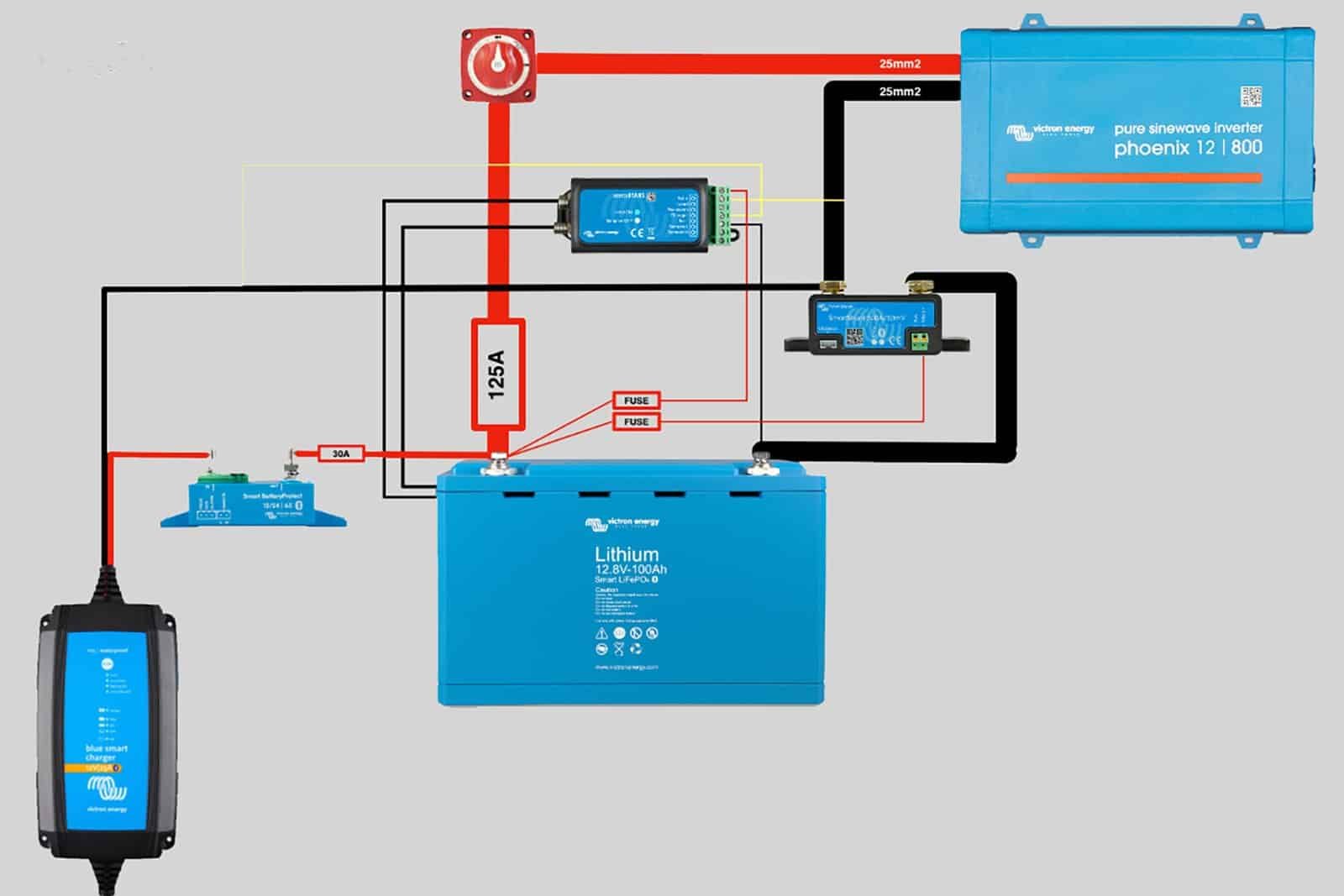
Common mistakes include mixing old and new batteries, oversizing inverters “just in case,” or buying cheap modified sine wave models that fry sensitive electronics. Many DIYers also underestimate cable sizes, leading to voltage drop and overheating. Our Installing a 12v & 240v Campervan System guide highlights how batteries and inverters integrate with the wider system. This guide focuses specifically on optimising them.
Inverters also come with hidden costs. A cheap unit may look attractive but can waste energy even when idle, draining batteries overnight. Premium models like the Victron Phoenix inverter (see our top choice on Amazon below) are efficient, reliable, and designed for continuous vanlife use. Similarly, lithium batteries cost more upfront but last years longer than lead acid, making them a smarter long-term investment.
This hub walks you through everything: battery types, sizing, inverters, wiring, charging, monitoring, and real-world example setups. We’ll also cover safety, maintenance, and upgrades - so you can start small and expand over time. Whether you’re a weekend warrior or a full-time vanlifer, the right battery and inverter setup is the difference between a van that’s just livable and one that feels like home.
Understanding Leisure Batteries for Campervans
At the heart of every campervan electrical system is the leisure battery. Unlike your starter battery, which delivers a short burst of power to crank the engine, leisure batteries provide a steady supply over time. They’re designed to handle deep discharges, making them ideal for powering lights, fridges, and devices. Choosing the right type determines how long you can stay off-grid and how reliable your system feels.
The most basic option is the flooded lead-acid battery. It’s cheap and widely available but needs regular maintenance, including topping up with distilled water. These are increasingly rare in modern builds because they’re heavy, prone to venting gases, and have relatively short lifespans. While tempting for budget builds, most vanlifers now prefer sealed options like AGM or Gel for safety and convenience.
AGM (Absorbed Glass Mat) batteries are a popular middle ground. They’re sealed, maintenance-free, and less prone to spills or leaks. They can handle moderate depth-of-discharge (about 50%) and typically last 3 - 5 years. AGM batteries are heavier than lithium and bulkier for the same usable capacity, but they remain a solid choice for budget-friendly builds. A 100Ah AGM battery (see our top choice on Amazon below) is a common starting point.
Gel batteries are similar to AGM but use a gel electrolyte. They’re more resistant to vibration and tolerate deep discharge slightly better. However, they’re slower to recharge and more sensitive to incorrect charging profiles. They cost more than AGM but don’t quite offer enough advantages to justify the price for most vanlifers. As a result, Gel batteries are now less common in new conversions.
Lithium (LiFePO4) batteries are the gold standard for vanlife. They’re lighter, last much longer (up to 10 years), and allow deeper discharge (80 - 90%). This means a 100Ah lithium often provides nearly double the usable capacity of a 100Ah AGM. They recharge faster and maintain voltage under load, making them perfect for high-demand setups. A 200Ah lithium battery (see our top choice on Amazon below) is popular with full-timers.
The biggest downside of lithium is cost. Expect to pay three to four times as much upfront compared to AGM. However, when you factor in lifespan and usable capacity, lithium often works out cheaper long-term. They also require a Battery Management System (BMS) to protect against overcharge, undercharge, or extreme temperatures. Many modern lithium units include an integrated BMS for plug-and-play simplicity.
Understanding depth of discharge (DoD) is key to comparing batteries. AGM should only be discharged to about 50% to maintain lifespan, while lithium can safely go down to 80 - 90%. This means that to achieve 100Ah of usable capacity, you’d need a 200Ah AGM battery versus a 120Ah lithium. Although lithium is costly, you carry less weight and use less space for the same usable power.
Weight is another factor. A 100Ah AGM weighs around 25 - 30kg, while a lithium of the same capacity weighs 12 - 15kg. For larger systems, that difference is huge. Four AGMs could add over 100kg, while equivalent lithiums may weigh half that. Every kilogram counts in a campervan, especially when trying to stay under UK payload limits. Weight alone pushes many travellers toward lithium.
Charging requirements also vary. AGM batteries charge at a lower absorption voltage and require longer to top up fully. Lithium charges quickly but demands the right profile from chargers and alternators. Without a DC-DC charger, many modern vans with smart alternators won’t charge lithium properly. Our Split Charging & Alternator Wiring Guide guide explains how to integrate chargers safely for different chemistries.
Safety considerations differ too. Lead-acid and AGM batteries can vent hydrogen gas when overcharged, requiring ventilation. Lithium doesn’t vent under normal conditions, but poor-quality packs can be unsafe without a BMS. Buying from trusted brands is essential. A Victron SuperPack lithium battery provides peace of mind with built-in protection and reliability from a recognised name.
Lifecycle is another differentiator. AGM batteries typically last 500 - 1,000 cycles, depending on depth of discharge and care. Lithium often lasts 3,000 - 5,000 cycles. For weekend use, AGM may be fine, but for full-timers who cycle batteries daily, lithium easily outpaces AGM. When spread over years of use, lithium often works out the most economical option despite its higher upfront cost.
Choosing the right battery isn’t about the best tech - it’s about your lifestyle. Weekend campers can often get by with a single AGM, while full-timers running laptops, fridges, and induction hobs will benefit from lithium. Our Installing a 12v & 240v Campervan System guide shows how different batteries fit into real-world wiring diagrams. Always match battery type to usage, not just budget.
Mixing different batteries is almost always a bad idea. Old and new, AGM and lithium, or different capacities - they rarely play nicely. Mixing causes imbalance, where the weakest battery drags the rest down. If you need more capacity, expand with identical units or replace the bank entirely. It’s tempting to save money with mismatched spares, but the result is usually reduced performance and lifespan.
Understanding the basics of leisure batteries gives you the foundation for building your system. With the right type, capacity, and charging method, you’ll enjoy years of reliable power. Skimp on the wrong battery, and you’ll be swapping it out every season. In the next section, we’ll compare AGM vs Lithium in detail, so you can decide which makes sense for your van.
AGM vs Lithium: Which is Right for You?
When it comes to campervan batteries, the real debate is AGM vs Lithium. AGM has long been the go-to choice for DIY builds thanks to its affordability and availability. Lithium, however, is fast becoming the preferred option for full-timers and serious travellers. Each has unique strengths and weaknesses, and the right choice depends heavily on your budget, lifestyle, and willingness to invest upfront.
The biggest difference is usable capacity. AGM batteries should only be discharged to about 50% of their rated amp-hours, while lithium can be discharged 80 - 90% without damage. This means a 200Ah AGM bank delivers roughly 100Ah usable, while a 200Ah lithium gives 160 - 180Ah. Effectively, lithium offers nearly double the usable power for the same nominal capacity, making it far more efficient in real-world use.
Charging speed is another game-changer. AGM batteries take longer to reach full capacity, especially the last 20%. Lithium charges much faster and more efficiently, making it perfect for solar-heavy setups. For example, a 200W solar panel might fully recharge a lithium bank by mid-afternoon, while AGM could still be topping up into the evening. Our Solar Power for Campervans: UK Guide explains why this matters in British weather.
Weight and size also favour lithium. A 100Ah AGM weighs around 25 - 30kg, compared to 12 - 15kg for lithium. If you’re carrying a large bank, the difference can be over 50kg saved. That’s a huge deal when trying to stay under payload limits. More importantly, lithium’s compact form factor frees up valuable storage space. A 200Ah lithium battery can often replace multiple AGM units.
The catch? Cost. AGM is far cheaper upfront, often £150 - £200 for 100Ah, while lithium may cost £500 - £700 for the same capacity. But when you account for usable power and lifespan, lithium often wins. AGM may last 500 - 1,000 cycles, while lithium lasts 3,000 - 5,000. Spread across years of use, lithium usually works out cheaper in the long run, especially for full-time vanlifers.
Temperature tolerance is a factor often overlooked. AGM performs reasonably well in cold weather, while lithium can’t be charged below 0°C without risk of damage. Many modern lithiums include low-temperature cut-off or built-in heaters to overcome this. For UK winters, it’s important to insulate your battery area. Our Campervan Electrical Systems Explained guide covers safe installation practices for both chemistries.
Maintenance differs too. AGM is sealed and maintenance-free, but still needs occasional checks for voltage balance. Lithium is virtually maintenance-free, with a built-in Battery Management System (BMS) ensuring cells stay healthy. The BMS protects against overcharge, over-discharge, and overheating. A Victron lithium SuperPack (see our top choice on Amazon below) offers peace of mind with integrated BMS, perfect for those who want reliability without micromanaging their setup.
Charging compatibility is another consideration. AGM works with basic split charge relays, but lithium often requires a DC-DC charger to ensure the right voltage profile. Smart alternators in modern vans complicate things further, making DC-DC units essential. Our Split Charging & Alternator Wiring Guide explains why alternator-to-lithium charging can’t be done with cheap relays alone.
One advantage of AGM is simplicity. They work with nearly all existing chargers, solar controllers, and split-charge systems. Lithium demands specific equipment, meaning higher setup costs. For those doing quick, budget conversions or sticking to campsites with hook-up, AGM is often the better choice. It’s less efficient, but it works without complex upgrades, making it appealing to first-time converters.
In terms of safety, both have risks but are safe when installed properly. AGM can vent gases if overcharged, requiring some ventilation. Lithium doesn’t vent but must have a quality BMS. Poorly made lithium batteries from untrusted brands can be dangerous. Always buy from reliable suppliers. A Renogy lithium 100Ah is a solid choice trusted by many UK vanlifers.
Where AGM still shines is in occasional-use vans. If you’re only using your van on weekends, the lower upfront cost outweighs lithium’s longevity. AGM is fine for short trips with moderate loads like lights, fans, and phone charging. But if you’re running a 12v fridge, working remotely, or cooking electrically, lithium pays off quickly. Matching your battery to your lifestyle is key.
Resale value is another angle. Buyers often see lithium as a premium feature, boosting your van’s value. A build advertised with “brand new 200Ah lithium bank” attracts more attention than “2x AGM leisure batteries.” This resale bonus doesn’t apply to AGM, which depreciates faster. If you’re building to sell in the future, lithium can be a selling point worth factoring in.
So which should you choose? If you’re on a budget, stick with AGM - it’s simple, cheap, and gets the job done. But if you want maximum off-grid capability, long-term value, and lighter weight, lithium is the winner. Our Installing a 12v & 240v Campervan System guide shows how both types integrate into real-world wiring diagrams, helping you plan whichever route you take.
Ultimately, AGM vs Lithium isn’t about which is “best” in general - it’s about which is best for you. AGM suits part-time campers and budget conversions. Lithium suits full-timers, digital nomads, and those who value efficiency and longevity. Once you’ve chosen your battery type, the next step is working out how much capacity you actually need - which we’ll cover in the next section.
Battery Bank Sizing & Configuration
Choosing the right battery bank size is one of the most important parts of designing your campervan electrics. Too small, and you’ll constantly run out of power. Too large, and you’ll waste money, weight, and space. Sizing correctly means balancing your daily energy needs with realistic charging opportunities. It’s not about copying someone else’s setup - it’s about tailoring a system to your own lifestyle.
The first step is calculating your daily energy consumption. List every appliance - lights, fridge, water pump, fans, laptop, Starlink - and note their wattage. Multiply by average daily usage hours to get watt-hours (Wh). Add them up to get a daily total. For example, a 50W fridge running 12 hours consumes 600Wh. This total becomes your benchmark for sizing batteries and charging sources.
Convert watt-hours into amp-hours to match battery ratings. Divide by your system voltage (12v in most vans). For example, 1,200Wh ÷ 12v = 100Ah per day. Remember that AGM batteries only allow ~50% usable capacity, while lithium offers 80 - 90%. So to meet 100Ah daily, you’d need 200Ah of AGM or 120Ah of lithium. This difference is why chemistry matters so much.
To account for cloudy days or downtime, most vanlifers size for two to three days of autonomy. That way, if solar output drops, you’re not stranded. Using the previous example of 100Ah/day, an AGM system might need 400 - 600Ah, while lithium needs 240 - 300Ah. Our Campervan Electrical Systems Explained guide expands on daily vs reserve capacity planning for UK weather.
Here’s a simple energy budget table to illustrate:
Vanlife StyleDaily Use (Wh)AGM Bank SizeLithium Bank SizeWeekender (lights, phones)400 - 600200 - 300Ah AGM120 - 150Ah LiFePO4Full-time (fridge, laptops)1,000 - 1,500400 - 600Ah AGM240 - 300Ah LiFePO4Heavy use (induction, Starlink)2,000 - 3,000600 - 800Ah AGM400 - 500Ah LiFePO4
Configuration also matters. Series connections increase voltage (e.g., two 6v batteries in series = 12v), while parallel connections increase capacity (two 12v 100Ah in parallel = 200Ah). Most vanlifers stick to 12v systems, but series wiring is useful when using 6v batteries. Always match identical batteries in type, age, and size to avoid imbalance and premature failure.
Parallel wiring is most common in campervans. It allows you to expand capacity easily by adding identical units. However, ensure cables are equal length from each battery to the bus bar to keep load balanced. A bus bar kit simplifies this, ensuring even current distribution. Badly wired parallel banks cause one battery to work harder than others, reducing lifespan.
For lithium banks, consider whether to buy a single large unit or multiple smaller ones. A single 200Ah lithium is compact and easy to install, but multiple 100Ah units may offer redundancy - if one fails, you’re not left stranded. Our AGM vs Lithium comparison section explains how battery chemistry affects this choice, particularly regarding BMS and monitoring.
Remember that charging sources must keep up with usage. A 400Ah AGM bank is useless if you only have a 100W solar panel - it’ll never fully charge. Balance battery size with alternator charging, solar, and hook-up availability. Our Split Charging & Alternator Wiring Guide shows how alternators support larger banks, while the Solar Power for Campervans: UK Guide covers solar integration.
Weight and space constraints limit what’s practical. Four 100Ah AGMs may take up an entire seat box and add over 100kg. A single 200Ah lithium weighs half that and frees up storage. Space is premium in vans, so consider battery footprint early in your design. A 200Ah lithium battery slimline is ideal where space is tight but capacity is needed.
Monitoring is vital to protect your bank. AGM relies on voltage readings, which are imprecise, while lithium benefits from shunt monitors for accurate state-of-charge. A Victron SmartShunt (see our top choice on Amazon below) integrates with Bluetooth to give live readings. Monitoring prevents accidental deep discharges that shorten lifespan.
https://theferalway.com/?p=99


Comments
Post a Comment