Choosing the Right Solar Panels for Your Van
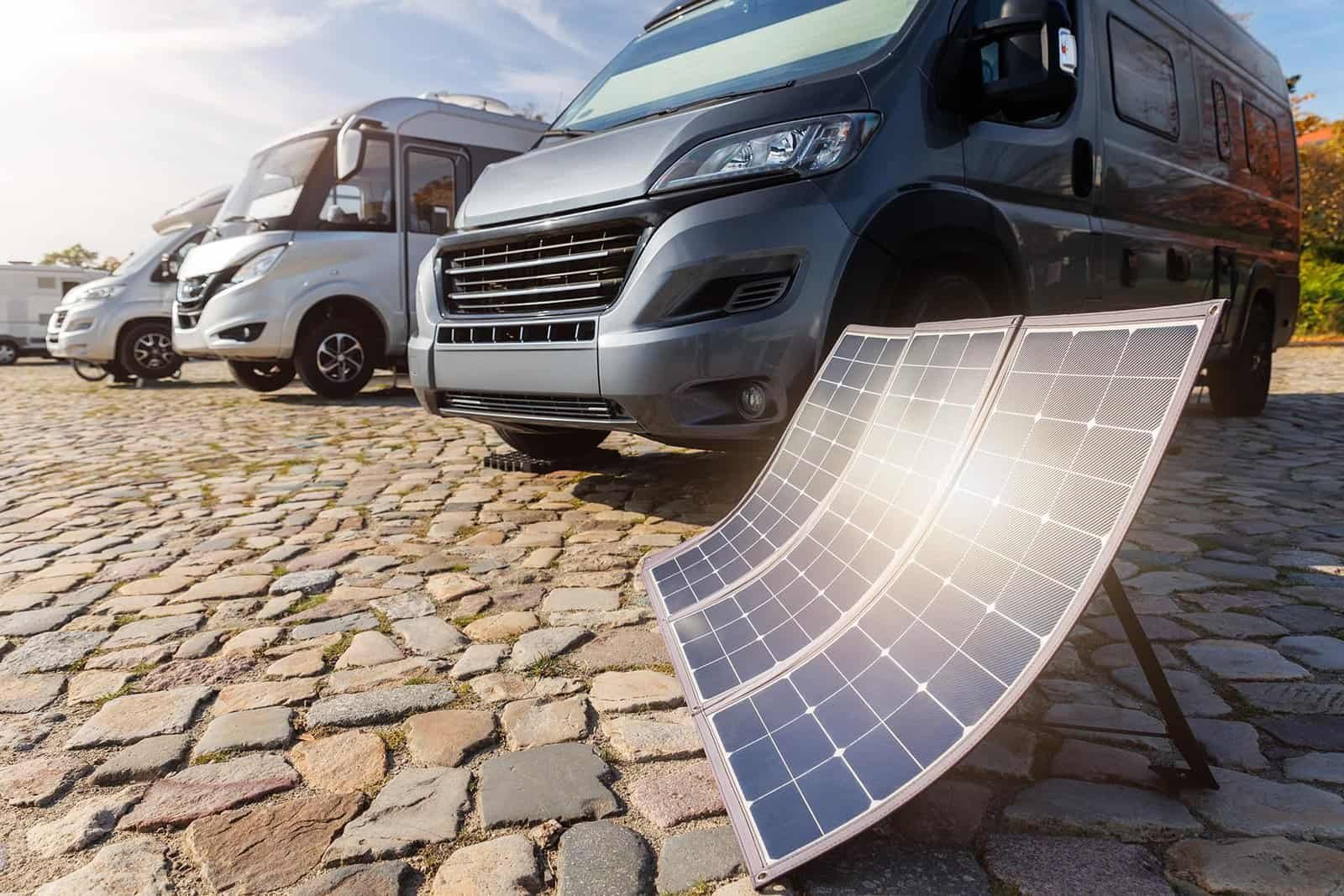
Picking the right solar panels for your campervan is one of the most important choices in a campervan build. Panels vary in type, efficiency, cost, and lifespan, and the wrong decision can leave you with flat batteries or wasted money. Whether you’re fitting out your first van or upgrading, this guide builds on our Solar Power guide to help you choose wisely.
There are five main panel types relevant to vanlife: monocrystalline, polycrystalline, rigid, flexible, and portable suitcase panels. Each offers unique advantages depending on your roof space, travel style, and budget. A 100W monocrystalline panel (see our top choice on Amazon below) suits small vans, while a 200W rigid panel (see our top choice on Amazon below) powers full-time setups. Understanding these differences is the first step in designing a reliable system.
The UK’s unpredictable climate makes choosing correctly even more important. Long summer days can deliver abundant solar, but in winter, yield can collapse to a fraction. Our Seasonal Performance in the UK section shows why efficiency and flexibility matter here more than anywhere. Picking the wrong panels can mean struggling through grey weeks with drained batteries.
Roof space is another constraint. Smaller vans like VW Transporters can only fit 200 - 300W without serious compromise, while larger box vans can host 600W or more. Our Solar Panel Sizing guide explains how to calculate what you need, but panel choice often determines whether that wattage is achievable at all.
Common mistakes include buying cheap flexible panels that fail after a year, overloading PWM controllers with big arrays, or assuming “all panels are the same.” They’re not. Quality and design matter as much as raw wattage. Our Common Mistakes & Troubleshooting section highlights the pitfalls, but this hub is about making the right choice up front.
Lifestyle plays a huge role. A weekend warrior may only need a suitcase panel for occasional charging. A full-time digital nomad might demand 600W of rigid roof panels feeding a lithium bank. A portable solar suitcase (see our top choice on Amazon below) offers flexibility for seasonal users, while premium rigid panels deliver long-term reliability. Our Campervan Electrical Systems Explained guide shows how solar ties into bigger systems.
This hub will compare each solar type in detail, covering efficiency, durability, cost, and suitability for UK vanlife. We’ll explore mono vs poly, rigid vs flexible, and when portable panels make sense. By the end, you’ll know which panel type fits your van, budget, and travel style - so you can invest once and enjoy reliable power for years.
Monocrystalline vs Polycrystalline Panels
When shopping for solar panels, the first decision is usually monocrystalline vs polycrystalline. These two technologies dominate the market, and while they do the same job - turning sunlight into electricity -they differ in efficiency, cost, and space requirements. Choosing between them isn’t just about budget; it’s about whether your van has the roof space and energy needs to justify one over the other.
Monocrystalline panels are made from single-crystal silicon cells. This uniform structure allows electrons to move more efficiently, giving them higher efficiency ratings - typically 18 - 22%. That means more watts per square metre. For UK vans where roof space is limited, this efficiency advantage is a game-changer. A 100W monocrystalline solar panel is one of the most popular starter options for compact conversions.
Polycrystalline panels, by contrast, are made from multiple silicon crystals melted together. This creates grain boundaries that slightly reduce efficiency - usually 15 - 17%. They’re cheaper to produce, which makes them attractive for budget builds. A 150W polycrystalline solar panel costs less per watt than mono, but you’ll need more roof area to achieve the same power.
The choice between mono and poly often comes down to roof size. A Transit LWB or box van has room for 400 - 600W, so poly can work well. But in smaller vans like a VW Transporter, roof space is tight - mono is the only realistic option. Our Solar Panel Sizing & Power Calculations section explains how roof limits affect your panel choice.
Durability is another factor. Both panel types use glass and aluminium framing, meaning they last 20+ years in static installs. In campervans, vibration and weather reduce lifespan, but the difference between mono and poly is negligible. Quality of manufacture matters more than cell type. Buying from trusted brands pays off more than saving £20 on a no-name panel.
UK weather gives monocrystalline panels an edge. They perform better in low-light and cloudy conditions, harvesting usable power even when skies are grey. Poly panels lose proportionally more output under the same conditions. Our Seasonal Performance in the UK section shows why mono is worth the extra cost for year-round use, especially in northern regions.
Cost is where poly fights back. On a per-watt basis, poly panels are cheaper - sometimes by 15 - 20%. For builders with large vans and modest budgets, poly offers a way to get 400 - 500W of capacity without breaking the bank. A budget 200W poly panel is common in larger van conversions where roof space isn’t a limiting factor.
Weight is broadly similar between mono and poly, so it doesn’t factor much into the decision. Both types weigh about 8 - 12kg per 100W, depending on frame thickness. The real difference is watts per square metre. Mono simply delivers more in less space, which is why it dominates modern builds.
Mixing mono and poly on the same system isn’t recommended. Electrical characteristics differ, which causes imbalance and wasted harvest when wired together. If you plan to expand later, stick with one type for consistency. Our Real-World Solar Setups section shows how mismatched panels often lead to wasted upgrades.
Lifespan warranties can vary slightly. Premium monocrystalline panels often carry 20 - 25 year performance warranties, while budget poly panels may offer 10 - 15 years. In a campervan, where lifespan is shortened by vibration and weather anyway, this difference may not matter much. Still, warranties reflect manufacturer confidence - so it’s worth noting.
Paragraph 11
Here’s a quick comparison table:
FeatureMonocrystallinePolycrystalline
Efficiency18 - 22 - 17%
Space RequirementLowerHigher
Cost per WattHigherLower
Low-Light PerformanceBetterWeaker
Lifespan20+ years15 - 20 years
If stealth is your priority, mono panels also look sleeker—black cells with black frames. Poly panels have a bluish tint, making them more noticeable on rooftops. While not a deal-breaker, it matters for city stealth camping. Our Complete Campervan Conversion Guide UK covers why stealth considerations affect design decisions beyond just solar.
For weekend campers, the choice matters less. If you’re only topping up small AGM banks occasionally, polycrystalline can be fine. But for full-timers relying heavily on solar, mono is the better long-term investment. It maximises yield in limited space and cloudy conditions. A 200W monocrystalline panel is a proven choice for serious UK vanlifers.
In summary, both panel types work, but monocrystalline wins for most UK builds. Poly makes sense in larger vans with generous roof space and tight budgets. Mono shines in smaller vans, full-time setups, and cloudy climates. Next, we’ll compare rigid vs flexible panels, showing how construction affects durability, stealth, and efficiency.
Rigid vs Flexible Panels
Beyond mono vs poly, the next big decision is rigid vs flexible panels. Both convert sunlight into energy, but their construction and installation methods make them very different in performance and longevity. Choosing the wrong type can mean years of frustration - or reliable power for decades. Our Types of Solar Panels section introduced them; here we dig deeper.
Rigid panels are framed in aluminium with tempered glass fronts. They’re the industry standard, offering durability, airflow, and long service life. A 200W rigid solar panel is typical for full-time UK builds. By elevating panels above the roof, airflow cools them, boosting efficiency. They may look bulkier, but they’re built to last through years of rough British weather.
Flexible panels use thin layers of silicon bonded to a polymer backing. They’re lightweight and low-profile, often just a few millimetres thick. This makes them great for stealth vans or roofs where weight is critical. A 100W flexible ETFE panel (see our top choice on Amazon below) is common on VW Transporters. Their sleek design keeps vans discreet, avoiding the “obvious campervan” look.
Durability is where rigid wins hands down. Rigid panels can last 20 - 25 years in static installs and 10 - 15 years in vans. Flexible panels rarely last beyond 5 - 10 years in UK conditions, especially cheap PET-backed ones. ETFE-backed panels fare better, but frost cycles and heat still cause cracking over time. Our Safety & Maintenance section explains why upkeep is vital.
Weight differences are significant. Rigid 200W panels weigh 12 - 15kg, while flexible equivalents can be 3 - 4kg. For payload-sensitive vans, this matters. But the trade-off is lifespan - rigid adds kilos but pays back with reliability. Our Vanlife Budgeting & Costs guide shows how weight impacts payload and insurance compliance in UK vans.
Heat management is another dividing line. Rigid panels benefit from airflow under the frame, keeping cells cooler and efficiency higher. Flexible panels bond directly to the roof, trapping heat and reducing efficiency by up to 15%. In UK summers, that can mean the difference between a fridge running reliably and food spoiling.
Installation differs too. Rigid panels bolt or bond via brackets, requiring a roof gland for cables. Flexible panels glue directly with adhesives like Sikaflex 221 sealant (see our top choice on Amazon below). This makes them easier to fit but riskier long-term. Without airflow, adhesives degrade under UV, leading to delamination and leaks if not inspected regularly.
Stealth is the one area flexible panels dominate. Black-on-black panels blend into the roof, making vans look like standard work vehicles. Rigid panels are obvious, advertising “campervan” from a distance. For city-based stealth campers, flexibility often wins despite lower efficiency. Our Complete Campervan Conversion Guide UK covers why stealth influences many design choices.
Cost is similar per watt, but lifecycle value differs. A budget 150W flexible panel might cost £120 and last 5 years. A 150W rigid panel might cost £100 and last 15 years. Over time, rigid is the better investment. Flexible suits temporary builds or renters, while rigid pays back for long-term ownership.
Maintenance is more demanding with flexible panels. They need regular checks for bubbling, cracking, or adhesive wear. Cleaning also matters more, as dust builds faster on bonded surfaces. Rigid panels need less hands-on care beyond cleaning and sealant checks. Our Common Mistakes & Troubleshooting section explains how neglected flex panels often fail prematurely.
Noise is a small but real factor. Rigid panels mounted incorrectly can rattle or whistle at motorway speeds. Flexible panels, glued flush, create no drag noise. Careful installation using aerodynamic brackets reduces this problem, but it’s worth noting for light sleepers. A low-profile rigid mounting kit helps keep things silent.
Mixing rigid and flexible panels isn’t ideal, as their electrical outputs differ slightly under heat. If combined, use separate MPPT inputs. A dual-input MPPT controller (see our top choice on Amazon below) allows this safely. Our Charge Controllers section explains why mismatched panels confuse basic controllers.
Resale value is higher with rigid panels. Buyers recognise them as reliable, long-lasting, and professional. Vans with flexible-only systems often face scepticism, unless premium ETFE panels are used. If you’re building for resale, rigid is the smarter investment. Our Real-World Solar Setups section shows rigid dominates full-timer builds.
In summary: rigid wins on durability, efficiency, and long-term value; flexible wins on stealth, weight, and ease of install. If you need a sleek, lightweight solution for occasional use, flexible can work. But for most UK full-timers, rigid panels remain the best choice. Next, we’ll look at portable solar options and how they complement roof installs.
Portable Solar Options
Not every panel has to live on your roof. Portable solar panels - usually folding suitcase-style units offer flexibility that fixed panels can’t match. They’re especially useful in the UK, where winter sun sits low and shaded parking is common. By moving panels into direct sunlight and tilting them toward the sun, you can boost harvest dramatically compared to flat roof installs.
The most common portable option is the solar suitcase. These panels fold in half for storage, with built-in stands to angle toward the sun. A 200W portable solar suitcase (see our top choice on Amazon below) is the sweet spot for UK vanlifers. Unlike fixed roof panels, you can chase the sun across the day, squeezing out every extra watt in cloudy or low-angle conditions.
Portables are invaluable in winter. A flat 200W roof panel may only produce 150Wh/day in December. Tilted portables can double that, hitting 300Wh or more. Our Seasonal Performance in the UK section shows why suitcase panels are often the only way to stay off-grid through dark months without endless driving or hook-ups.
Another strength is parking flexibility. With roof panels, you must park in the sun to generate power often leaving the van baking hot. Portables let you park in the shade while placing panels metres away in direct sunlight. A long MC4 extension cable makes this possible. Our Hybrid Systems section shows how this complements alternator charging.
Portables shine at festivals and wild camping. At events where vans are packed tightly, roof shading is inevitable. Being able to set up a suitcase panel away from other vehicles makes the difference between warm beers and ice-cold drinks. Our Vanlife Tips & Tricks – Packing & Storage Hacks explains how to stash suitcase panels without wasting valuable space.
Storage is the main drawback. A 200W suitcase weighs around 12 - 15kg and takes up cupboard space. For small vans, this can be a deal-breaker. Larger vans or motorhomes handle it easily. If you’re limited, a 120W folding solar blanket is a lighter, space-saving alternative. Our Choosing Campervan Layouts guide shows how gear storage shapes interior design.
Security is another concern. Unlike fixed roof panels, portable panels can be stolen if left unattended. Some vanlifers lock them with cable locks, but most simply store them when not in use. If you’re travelling through cities or busy campsites, this is something to consider. Our Campervan Security Guide covers theft prevention in detail.
Portables often come bundled with cheap PWM controllers. While fine for topping up AGMs, they waste energy on lithium banks. Swapping to a quality MPPT is smart. A Victron SmartSolar MPPT (see our top choice on Amazon below) paired with a portable panel boosts harvest. Our Charge Controllers section explains why.
Flexibility makes portables excellent secondary panels. Many vanlifers run 300 - 400W of rigid roof panels for daily loads, then carry a suitcase for winter or long stationary stays. This hybrid approach balances roof convenience with portable adaptability. Our Real-World Solar Setups section shows how many UK full-timers combine both.
Cost is higher per watt compared to roof panels. A 200W roof panel may cost £150 - £200, while a 200W suitcase costs £300 - £400. But the flexibility often justifies it. Think of it as insurance - most of the time roof panels suffice, but when they don’t, a portable saves the day. A Renogy 200W solar suitcase is a proven favourite.
Portables require more hands-on effort. Unlike roof panels that quietly charge all day, suitcases need to be set up, angled, and moved as the sun shifts. For some, this is part of the fun; for others, it’s a chore. Be realistic about how much effort you’re willing to put in before relying on them heavily.
Portable panels also work well in mixed setups with generators or power stations. A Jackery Explorer kit (see our top choice on Amazon below) can accept suitcase inputs, making them versatile beyond permanent installs. Our Essential Campervan Gadgets guide explains why portable power stations are increasingly popular in vanlife.
Durability varies. Portable frames and hinges face more wear and tear than roof panels. Look for reinforced cases, sturdy legs, and weatherproof MC4 connectors. A premium folding solar suitcase may cost more but will last longer. Our Safety & Maintenance section explains why regular checks matter.
In summary, portable solar panels are not replacements but supplements. They cover seasonal gaps, improve flexibility, and let you park in shade without sacrificing harvest. Downsides are storage, theft risk, and higher cost per watt. For UK vanlifers, combining roof-mounted and portable panels is often the most reliable year-round strategy. Next, we’ll explore efficiency and output in UK conditions.
Efficiency & Output in UK Conditions
Solar panel wattage ratings are often misleading for UK vanlifers. A “100W panel” rarely delivers 100W outside of lab conditions. In practice, UK weather, shading, and installation angles drastically reduce output. Understanding efficiency helps you set realistic expectations. Our Solar Panel Sizing & Power Calculations section explained the maths - here we show what those numbers mean in real life.
Efficiency is the ratio of how much sunlight a panel converts into electricity. Monocrystalline panels hit 18 - 22%, polycrystalline average 15 - 17%. A high-efficiency 200W monocrystalline panel delivers more energy in limited roof space. For compact vans, this efficiency per square metre is critical. In larger vans, efficiency matters less since you can simply add more panels.
Seasonal swings are huge in the UK. In summer, you might see 4 - 5 peak sun hours, meaning a 200W panel can generate 800 - 1,000Wh/day. In December, the same panel might scrape 100 - 150Wh/day. Our Seasonal Performance section detailed this variation - -planning for the lean months is the only way to avoid disappointment.
Here’s a rough guide to expected daily yields in the UK:
Panel WattageSummer Output (Wh/day)Winter Output (Wh/day)
100W400 - 50080 - 150
200W800 - 1,000150 - 300
400W1,600 - 2,000300 - 600
Panel type affects how much of that yield you can actually capture.
https://theferalway.com/choosing-the-right-solar-panels-for-your-van/


Comments
Post a Comment