How to Install a Campervan Solar System
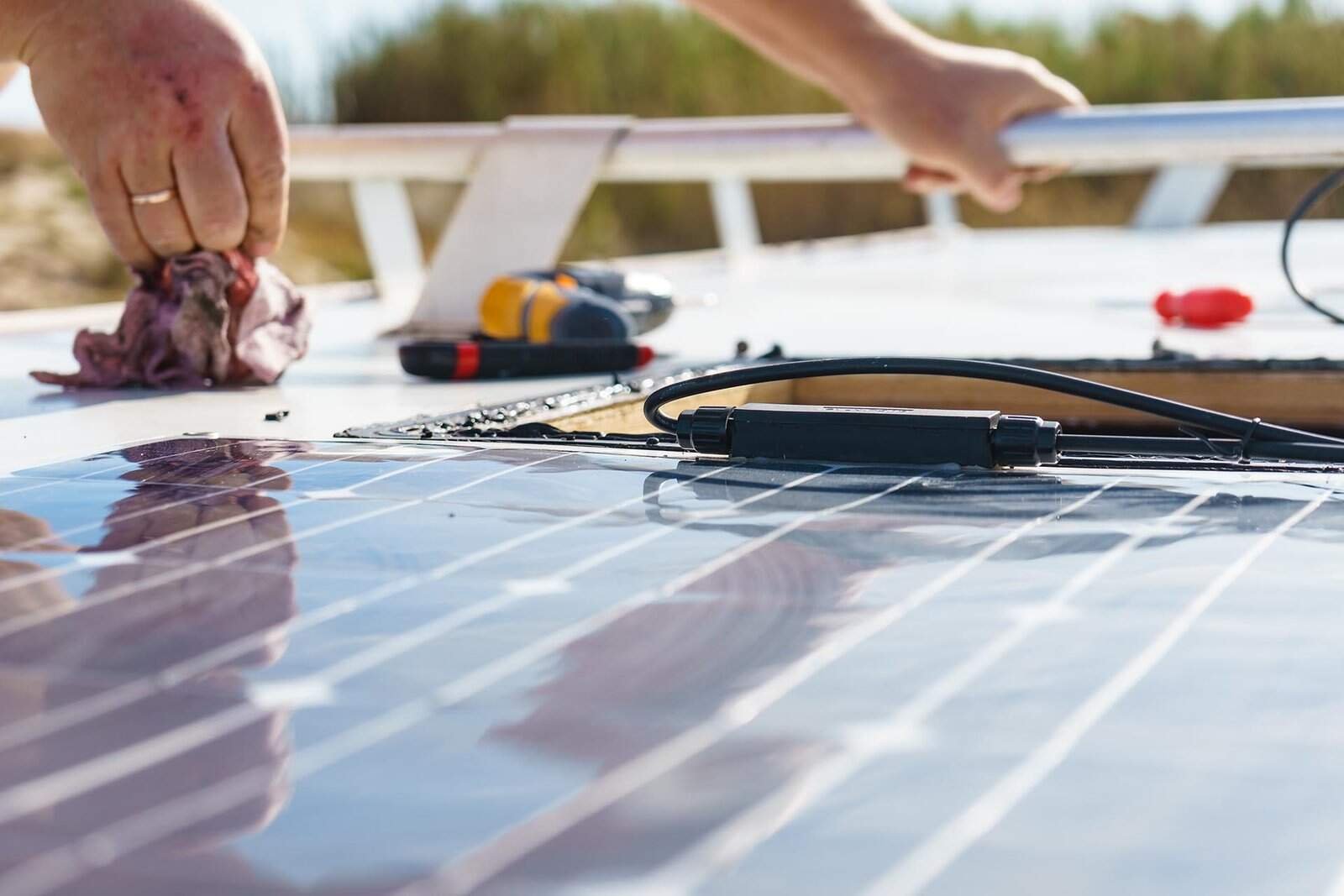
Installing solar panels on your campervan might feel daunting, but with planning, the right tools, and a methodical approach, it’s a job most DIYers can tackle. A well-installed system means independence from campsites and the freedom to travel off-grid across the UK. This hub builds on our Solar Power focusing on the practical steps from start to finish.
A complete solar install involves more than just bolting a panel to the roof. You’ll need panels, a charge controller, fuses, isolators, cables, roof glands, and a properly sized battery bank. A 200W monocrystalline panel kit (see our top choice on Amazon below) is a popular starting point. Our Choosing the Right Solar Panels guide explained panel types - now it’s time to wire them together safely.
Safety comes first. Campervan solar involves high currents, roof drilling, and wiring that, if installed incorrectly, can cause fires or water leaks. Following best practice is critical. Our Campervan Electrical Systems Explained pillar highlights why solar is just one part of a bigger system and why planning and protection matter as much as panel size.
The UK brings its own challenges. Roof space is limited, weather is unpredictable, and payload rules can restrict how much equipment you can fit. Future-proofing your install avoids expensive rewiring later. A Victron SmartSolar MPPT 100/30 (see our top choice on Amazon below) is one example of a controller that allows expansion without needing replacement down the line.
Common beginner mistakes include under-sizing cables, skipping fuses, or using the wrong sealant for roof penetrations. These shortcuts might save money today but lead to costly failures later. Our Common Mistakes & Troubleshooting section outlines the pitfalls; this hub will show you how to avoid them when installing your own system.
Think of this as a roadmap. We’ll start with planning, move through tools and mounting, then cover wiring, controller installation, and battery connections. We’ll finish with testing, commissioning, and future upgrades. By the end, you’ll know exactly how to build a safe, reliable campervan solar system that keeps you powered on the road.
Whether you’re a weekend adventurer fitting a single 100W panel or a full-time digital nomad building a 600W system, this guide has you covered. With the right approach, you’ll not only save money on installation but also gain the satisfaction of knowing your van’s power system inside out. Let’s dive in.
Planning Your Solar System
Every successful solar install starts with a plan. Rushing in without calculating your needs often leads to underpowered systems or wasted money. Planning means working out how much energy you use daily, matching that to solar input, and ensuring your batteries can store enough to ride through cloudy UK days. Our Solar Panel Sizing section covers the maths - here’s how to apply it.
Start by listing your electrical loads. Fridges, lights, laptops, fans, and chargers all draw power. Add up their consumption in watt-hours per day. A compressor fridge might use 400 - 600Wh daily, while a laptop averages 50 - 100Wh. A 12v watt meter is handy for measuring actual draw. This daily total guides your solar panel and battery sizing.
Once you know your daily energy demand, multiply it by two. Why? UK weather is unreliable. Sizing for double your average use gives headroom for cloudy days. If you calculate 800Wh/day, plan for 1,600Wh/day input. This avoids running flat when grey skies linger. Our Efficiency in UK Conditions section shows how yield varies seasonally.
Battery capacity must balance with solar harvest. A 200W panel producing ~800Wh/day in summer can only store that if paired with at least 100Ah lithium or 200Ah AGM. Undersized banks waste harvest, while oversized banks stay undercharged. A Renogy 200Ah lithium battery (see our top choice on Amazon below) is a common pairing for 400 - 600W systems. Our Best Campervan Batteries & Inverter Setup goes deeper.
Roof space is a practical limiter. Small vans may only fit 200 - 300W of panels, while box vans can host 600 - 800W. Measure your roof carefully, accounting for skylights, vents, and racks. A 200W rigid monocrystalline panel measures ~150×70cm, so plan layout accordingly. Our Choosing the Right Solar Panels guide shows which panel types maximise space.
Weight also plays a role. Rigid panels weigh 10 - 12kg per 100W, while flexible weigh half that. For vans close to payload limits, every kilo matters. Our Vanlife Budgeting & Costs explains how weight ties into MOT and insurance. Choosing lighter panels may reduce lifespan but can keep you road legal.
Budget is another constraint. A small DIY system might cost £400 - £600, mid-range builds £1,200 - £2,000, and premium setups £4,000+. Balance your needs with your wallet. A starter solar kit gets you going cheaply, but investing in MPPT controllers and lithium pays off long term. Our Cost & Value for Money section compares options.
Don’t forget redundancy. Solar alone can’t cover UK winters. Plan hybrid charging - alternator, hook-up, or a portable suitcase panel for cloudy weeks. A Renogy DC-DC + MPPT charger (see our top choice on Amazon below) combines alternator and solar charging in one. Our Hybrid Systems section explains why multiple inputs guarantee year-round reliability.
Layout planning avoids messy installs. Route cables away from moving parts and heat sources. Leave space for expansion - fitting one panel today shouldn’t block you from adding another later. Our Future-Proofing Your Solar Choice shows how foresight avoids costly rewiring.
Use planning tools to visualise. Sketch your roof, mark panel positions, glands, and cable runs. Draw a wiring diagram showing panels, controller, fuses, isolators, and battery connections. A DIY solar planner kit makes this process easier. Our Wiring & Installation Basics section will tie into this later.
Planning isn’t just technical - it’s about lifestyle. If you park daily in towns, stealth flexible panels may suit. If you wild camp in the Highlands, oversized rigid mono is essential. If you work online, budget for a bigger array. Our Matching Panels to Lifestyle section explains why lifestyle is the ultimate driver of solar design.
In summary, planning means calculating loads, sizing panels and batteries, considering space, weight, budget, and lifestyle. Get this wrong, and your system will underperform from day one. Get it right, and you’ll enjoy years of off-grid freedom. With the plan in place, it’s time to choose the right components for your system.
Choosing the Right Components
Once you’ve planned your solar system, it’s time to pick the components. This includes panels, charge controller, batteries, inverter, fuses, and cabling. Each choice affects efficiency, safety, and long-term reliability. Cutting corners here often leads to frustration later. Our Choosing the Right Solar Panels guide already covered panel types - this section expands into the full kit you’ll need.
Solar panels are the starting point. Monocrystalline rigid panels are the go-to for most UK builds, offering the best balance of efficiency and lifespan. Polycrystalline panels save money but need more roof space. A 200W monocrystalline rigid panel (see our top choice on Amazon below) is a popular choice for full-timers. Our Monocrystalline vs Polycrystalline section broke down the pros and cons.
Flexible panels suit stealth campers and lightweight builds. ETFE-backed panels last 5 - 8 years and weigh half as much as rigid. A 100W ETFE flexible panel (see our top choice on Amazon below) is often used on smaller vans. However, rigid panels last longer and stay cooler thanks to airflow. Our Rigid vs Flexible Panels section explains why most full-timers stick with rigid.
Next comes the charge controller, the brain of your system. PWM controllers are cheap but inefficient above 200W. MPPT controllers extract 20 - 30% more energy, especially in cloudy UK conditions. A Victron SmartSolar MPPT 100/30 is a reliable mid-size option. Our Charge Controllers section explains why MPPT is almost always the better investment.
Controller sizing is crucial. Match the maximum panel input voltage (Voc) and output current to your array. For example, a 400W array at 12v may need a 30A MPPT. Overspec slightly if you plan to expand. A Renogy Rover 40A MPPT (see our top choice on Amazon below) offers extra headroom. Our Future-Proofing Your Solar Choice section covers why overspec saves money long term.
Batteries store the energy your panels harvest. AGM batteries are cheaper but heavier and only allow 50% usable depth. Lithium (LiFePO₄) is lighter, lasts longer, and offers 80 - 90% usable capacity. A Renogy 200Ah lithium battery pairs well with 400 - 600W systems. Our Best Campervan Batteries & Inverter Setup guide explains the trade-offs in depth.
For small budgets, a single 100Ah AGM may suffice. For serious off-grid setups, aim for 200 - 400Ah lithium. Remember weight: a 200Ah AGM weighs ~60kg, while a lithium equivalent weighs ~25kg. This matters for payload and handling. Our Vanlife Budgeting & Costs guide ties battery choice directly to legal weight considerations.
Inverters convert 12v DC to 240v AC, powering kettles, laptops, or induction hobs. Modified sine wave inverters are cheap but unreliable with sensitive electronics. Pure sine wave is the only real choice for vanlife. A Victron Multiplus 12/2000 inverter/charger (see our top choice on Amazon below) is a premium option, offering both shore power charging and AC output.
Inverter size should match your loads. A 600W inverter runs laptops and chargers. A 1,500 - 2,000W inverter handles kettles and blenders. For induction cooking, 3,000W is often required. Always fuse and isolate inverter connections. Our Campervan Electrical Systems Explained guide shows how inverters fit into the bigger system safely.
Cabling and connectors are often overlooked but critical. Undersized cables cause voltage drop, heat, and wasted power. Use solar-grade double-insulated cable and proper MC4 connectors. A 10mm² solar cable kit suits most mid-size arrays. Our Wiring & Installation Basics section explains why cable gauge matters.
Fuses and isolators protect your system. Fit fuses between panels and controller, controller and batteries, and batteries and inverter. Isolators allow safe disconnection during maintenance. A solar inline fuse + isolator switch kit is a must-have. Our Safety, Maintenance & Upgrades section reinforces why protection is non-negotiable.
Optional components include monitoring systems like the Victron SmartShunt, which shows exact harvest and consumption. A Victron Cerbo GX (see our top choice on Amazon below) integrates monitoring across solar, alternator, and shore power. Our Monitoring & Battery Management section covers why data makes solar easier to manage.
Lifestyle shapes component choice. A weekend warrior might only need a suitcase panel and small AGM, while a full-timer benefits from rigid panels, MPPT, lithium, and a large inverter. Our Matching Panels to Lifestyle section shows how user type dictates gear. Buy components that match your actual travel style.
In summary: pick quality components matched to your energy needs, lifestyle, and budget. Panels harvest, controllers manage, batteries store, inverters supply AC, and cables/fuses tie it all together. Skimp on any link, and the whole system suffers. With the right kit selected, the next step is gathering the tools and materials for installation.
Tools & Materials Needed
Installing campervan solar isn’t just about panels and batteries - you’ll need the right tools and consumables. Many DIYers underestimate this stage, then end up bodging jobs with the wrong gear. A proper toolkit ensures connections are safe, waterproof, and durable. Our Essential Tools & Materials for DIY Conversions guide already covered general build tools; here we’ll focus on solar-specific kit.
Start with cabling. Solar-grade double-insulated cable handles UV, heat, and vibration better than standard wire. For most mid-size UK systems, 6mm² - 10mm² cable is ideal. A 10mm² solar cable kit includes MC4 connectors for easy assembly. Our Wiring & Installation Basics section explains why sizing cable properly prevents dangerous voltage drop.
Connectors are critical. MC4 connectors are the solar industry standard, providing weatherproof, low-resistance joints. A MC4 connector kit gives you spares, which you’ll definitely need. Always use the correct crimp tool - bodged pliers lead to loose, overheating joints. Our Common Mistakes & Troubleshooting section highlights bad crimping as a top cause of failures.
Fuses and isolators protect your system. You’ll need inline fuses between panels and controller, and larger MIDI/ANL fuses for the inverter connection. A solar fuse + isolator switch kit (see our top choice on Amazon below) ensures you can disconnect safely. Our Safety, Maintenance & Upgrades section stresses why protection is non-negotiable.
Mounting hardware depends on your panel choice. Rigid panels need brackets and stainless bolts; flexible panels need adhesives. A rigid panel mounting kit works for most roof installs. A tube of Sikaflex 221 sealant bonds flexible panels and seals glands. Our Rigid vs Flexible Panels section shows why method matters.
Roof glands provide a waterproof entry point for cables. A double cable roof gland seals cables as they enter the van. Always bed glands in sealant to prevent leaks. Our Mounting Solar Panels section will explain how to fit these securely.
A crimping tool is essential for cable terminations. A solar crimp tool kit ensures firm, reliable connections. Pair this with a heat-shrink assortment kit to protect joins. Our Wiring Basics section shows where these tools come into play.
A multimeter is non-negotiable. You’ll use it to check polarity, voltage, and continuity before powering up. A digital multimeter (see our top choice on Amazon below) is a vital safety tool. Our Testing & Commissioning section relies on this step to avoid frying expensive components.
A drill and hole saw set are needed for roof glands. A step drill bit set makes neat cable holes. Always prime exposed metal to prevent rust. Our Complete Campervan Conversion Guide UK explains why rust-proofing drilled areas is essential for long-term durability.
Consumables are easily overlooked but essential: cable ties, conduit, grommets, and self-amalgamating tape. These keep cables secure and protected from vibration. A conduit and tie kit saves endless hassle down the line. Our Durability & Maintenance section showed why secure routing prevents abrasion damage.
Safety gear rounds out the list. Gloves protect from sharp aluminium frames, goggles guard against drilling debris, and insulated tools reduce electrical shock risk. A DIY solar safety kit bundles these basics. Our Campervan Electrical Systems Explained guide emphasises why safety is the foundation of every install.
Optional tools can save time. A cable label printer makes tidy installs easier to manage, especially when expanding later. Thermal cameras and clamp meters can help diagnose hot spots and current flow. Our Monitoring & Battery Management section ties in here, showing how pro installers catch issues early.
In summary, a solar install isn’t just panels and a controller - it’s a toolkit of cables, connectors, mounts, sealants, and testing gear. Buying the right tools upfront makes the job safer, easier, and longer lasting. With everything on hand, the next stage is mounting your solar panels securely on the roof.
Mounting Solar Panels
Mounting is one of the most critical stages of a campervan solar install. Done right, panels stay watertight, aerodynamic, and secure for years. Done wrong, you’ll face leaks, rattles, or worse - a panel flying off on the motorway. Our Rigid vs Flexible Panels section already covered panel types; here we focus on how to install them safely.
Rigid panels usually mount with aluminium brackets. These bolt into the van roof or screw into roof rails. A rigid panel mounting kit includes brackets and stainless fixings. Always use stainless hardware to avoid corrosion. For vans with factory roof rails, universal clamps avoid drilling altogether, reducing leak risk.
Flexible panels glue directly to the roof with adhesives. A tube of Sikaflex 221 sealant is the standard choice. Clean the surface thoroughly, then press panels down evenly. Flexible installs look sleek and stealthy but run hotter, as airflow is restricted. Our Durability & Maintenance section explains why adhesive installs need regular checks.
Placement matters. Avoid shading from roof vents, skylights, and racks. Even a small shadow can slash panel output by 30 - 50%. Position panels toward the centre of the roof for balance and to leave gutters clear for sealing. Our Efficiency in UK Conditions section showed how shading is a silent killer of yield.
Aerodynamics should be considered. Panels add drag and noise at speed. Mount rigid panels close to the roof with low-profile brackets to reduce turbulence. A low-profile solar mounting kit keeps installs neat. Vans that spend long hours on motorways benefit from smoother airflow, improving efficiency and reducing wind noise.
Always plan cable entry carefully. A double cable roof gland provides a waterproof pass-through. Drill holes slightly undersized, deburr edges, then paint exposed metal to prevent rust. Our Complete Campervan Conversion Guide UK explains why rust-proofing drilled holes is essential in UK climates.
Sealant is your best friendmand your biggest risk. Apply Sikaflex generously under brackets and around glands, but don’t overdo it. Too much can trap water. Check seals annually and reapply when cracks appear. Our Safety & Maintenance section explains why leaks are the number one failure point in DIY installs.
Consider stealth when positioning panels. Rigid panels are visible from the street, signalling “campervan.” Flexible panels, flush-bonded in black, disappear into the roofline. For city stealth campers, this may outweigh durability concerns.
https://theferalway.com/how-to-install-a-campervan-solar-system/


Comments
Post a Comment