Installing a 12v & 240v Campervan System
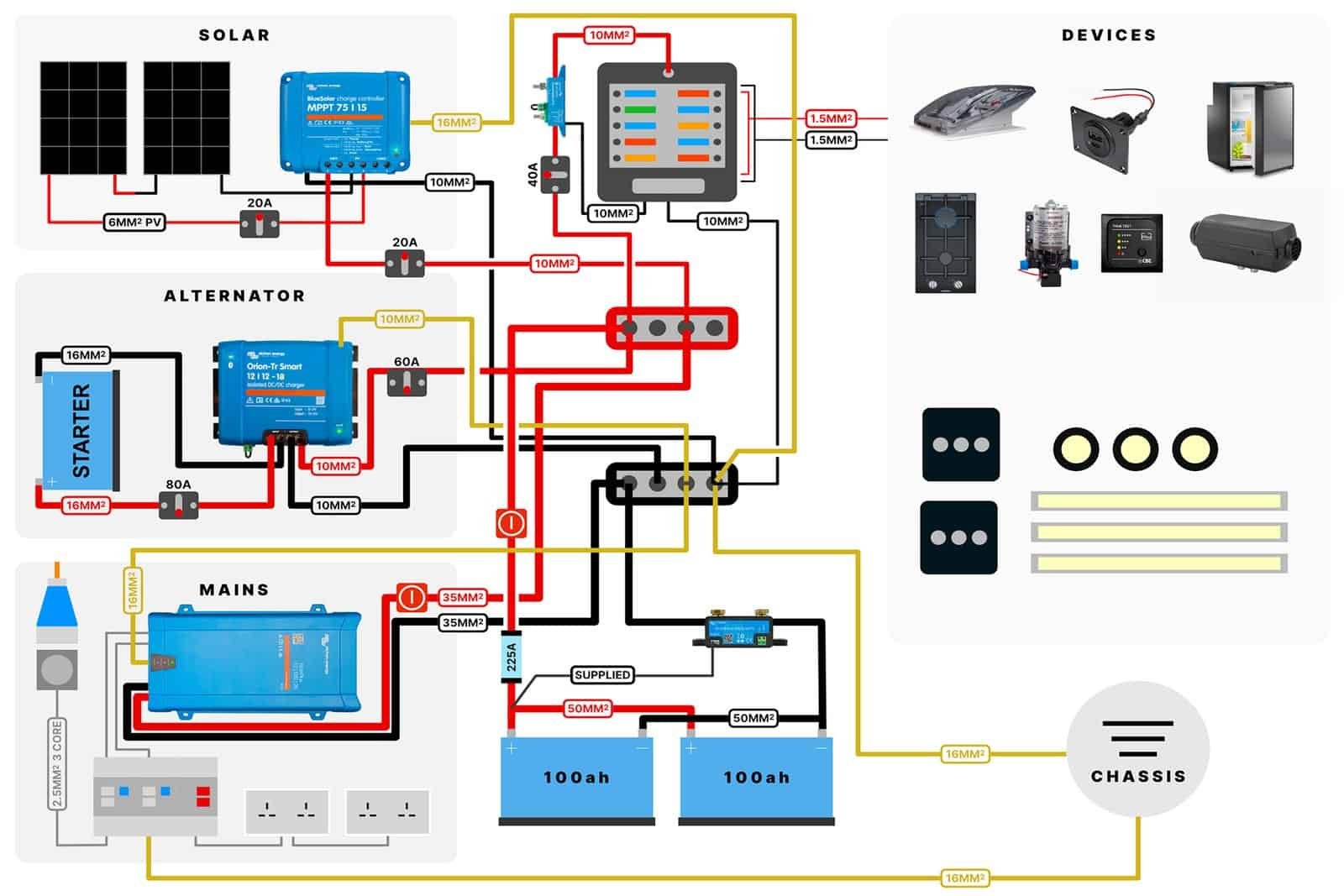
Wiring a campervan is one of the most rewarding - and intimidating - parts of a conversion. It’s the difference between a van that feels like a glorified tent and one that functions like a proper tiny home. Installing a 12v & 240v campervan system lets you power lights, charge devices, and even run appliances. Get it wrong, though, and you’re inviting safety risks and expensive mistakes.
The backbone of most campervans is the 12v system, which powers essentials like fridges, lights, and water pumps. Alongside it, a 240v system provides access to household comforts when connected to hook-up or running off an inverter. These two systems work in tandem, giving you flexibility both on-grid and off-grid. Learning how to install them correctly is essential for safe, reliable vanlife.
Unfortunately, many DIY builders underestimate the complexity of wiring. Skipping fuses, using undersized cables, or taking shortcuts with consumer units can lead to dangerous faults. We’ve seen plenty of burnt connectors and melted wires from rushed jobs. This guide walks you through each step safely, from batteries to bus bars to RCD protection. We’ll also reference our electrical guide for deeper context.
Another big factor is UK compliance. While wiring a 12v system is usually DIY-friendly, 240v mains electrics must meet BS 7671 Wiring Regulations. Even if you’re confident, having an electrician check your system is smart for insurance and safety. We’ll cover what you can do yourself, what’s best left to a pro, and where to use reliable gear like consumer units (see our top choice on Amazon below) .
Before you start, it’s important to gather the right tools and materials. A multimeter, cable crimper, heat-shrink connectors, and a solid fuse kit are essentials. Using budget tools might work short-term but often leads to weak crimps and faults down the line. For a full breakdown of kit, check our Essential Tools & Materials for DIY Conversions guide, which complements this guide.
Planning your wiring diagram is equally crucial. Decide early where to place batteries, inverters, fuse panels, and sockets. Future-proofing saves headaches later - oversize your bus bars, leave extra fuse slots, and allow for more solar input. Even if you start small, you’ll likely want to expand. Our Best Campervan Batteries & Inverter Setup shows real-world systems you can model.
This guide focuses on the practical installation process: planning layouts, wiring the 12v side, adding 240v with RCD protection, integrating split charging, and testing everything safely. Along the way, we’ll include example diagrams and real-world setups. By the end, you’ll have the knowledge and confidence to wire your campervan properly - or know when to call in a professional.
Planning Your Campervan Wiring Layout
Before touching a single cable, sit down and sketch your wiring layout. Planning saves time, money, and frustration. Think of it like plumbing: power flows from the battery through protective fuses, to distribution panels, then out to appliances. A clear diagram helps visualise this flow. Without it, you risk spaghetti wiring that’s difficult to troubleshoot later, or worse, dangerous shortcuts that compromise safety.
Start by identifying your power sources: leisure batteries, alternator split charging, solar panels, and campsite hook-up. Next, list your power consumers: lights, fans, fridge, water pump, sockets, and inverter. Connecting these on paper shows how everything links together. If you’re unsure where to begin, our Campervan Electrical Systems Explained guide breaks down the relationships between these components step by step.
Positioning components matters as much as wiring them. Batteries should be mounted low and central for weight distribution, while fuse boxes and bus bars are best installed in accessible cupboards or under seating. Inverters should be close to batteries to minimise voltage drop, while solar controllers are often mounted nearby. Grouping components creates shorter cable runs, saving both money and efficiency.
Think about where you’ll want sockets and switches. A common setup includes USB ports near the bed, 12v sockets in the living area, and 240v outlets in the kitchen. Too few outlets, and you’ll end up with extension leads everywhere. Too many, and you’ve overcomplicated things. A balanced approach is usually best. Our Best Campervan Batteries & Inverter Setup shows practical layouts.
When planning your 240v consumer unit, follow UK standards. Typically, this means a double-pole RCD with individual breakers for sockets and fixed appliances. Place it somewhere accessible, as you’ll need to test it regularly. Don’t bury it under a bed or behind a cupboard where you can’t reach. A campervan consumer unit ensures compliance and makes your setup look professional.
One common mistake is underestimating future upgrades. Even if you’re starting with a single AGM battery, leave room for lithium or additional panels later. Oversize your bus bars, install a larger fuse panel than you need, and leave space for expansion. Many vanlifers regret not planning for Starlink, portable induction hobs, or extra laptops down the road. Build with flexibility in mind.
Routing cables safely is part of layout planning. Avoid long runs where possible, keep wires away from heat sources like diesel heaters, and protect them with conduit when passing through metal bulkheads. Sharp edges are wiring’s worst enemy. Grommets are cheap, but they prevent dangerous shorts. Our Split Charging & Alternator Wiring Guide covers cable routing in detail for alternator circuits.
Moisture is another enemy of wiring. Don’t run cables near plumbing joints or showers without adequate waterproofing. Fuse panels and consumer units should be kept in dry spaces, ideally with some ventilation. A damp corner cupboard might seem convenient but leads to corroded connectors later. Protecting wiring from condensation is just as important as preventing physical damage in the planning stage.
Lighting placement is worth planning too. Instead of one central light, consider multiple LED zones - kitchen, bed, living area. This gives you flexibility and reduces unnecessary draw. Place switches logically where you’ll use them. For example, a bed light switch should be reachable from under the covers. A 12v LED lighting kit (see our top choice on Amazon below) makes it easy to plan multiple circuits from the start.
Use colour-coded wiring wherever possible. Following conventions - red for positive, black for negative, green/yellow for earth - saves time later. It also helps any electrician who inspects your van. Planning for consistency keeps your system safe and reduces confusion when troubleshooting years down the line. Electrical gremlins usually strike when you least expect them, so clarity now prevents headaches later.
Don’t forget to plan monitoring devices. Battery monitors, inverter remotes, and solar displays should be mounted where you can see them daily. Many travellers mount them above the kitchen or near the door for convenience. A Victron SmartShunt connects via Bluetooth (see our top choice on Amazon below), so even if you don’t want a physical display, you can monitor your system from your phone.
Diagrams are your friend. Even a hand-drawn sketch showing batteries, fuses, appliances, and charging sources is invaluable. For a professional touch, software like VictronConnect or online diagram generators let you drag and drop components. Our Essential Tools & Materials for DIY Conversions article lists diagram resources that can help make your wiring plan clearer before picking up a single cable.
Finally, think about accessibility. Place fuses and breakers somewhere you can reach without dismantling half the van. Systems that require a screwdriver just to reset a fuse quickly become a nightmare. Planning for easy access means you’ll actually maintain and check your system regularly, rather than ignoring it until something fails. Good layouts aren’t just safe - they’re user-friendly.
Essential Tools & Materials for Installation
No matter how clever your wiring plan is, you’ll need the right tools to bring it to life. Campervan electrics aren’t forgiving - poor crimps, cheap connectors, or undersized cables quickly cause faults. Investing in proper gear makes the difference between a reliable system and one that constantly fails. Some tools are non-negotiable; others simply make life easier and your installation neater.
First on the list is a quality cable crimper. Forget pliers or budget crimpers - they don’t create strong, lasting connections. A ratchet-style crimping tool ensures proper compression every time. Pair it with heat-shrink connectors for a waterproof seal. A professional crimping tool (see our top choice on Amazon below) might seem pricey upfront, but it saves hours of frustration and prevents dangerous loose connections down the line.
A multimeter is your second must-have. It allows you to measure voltage, current, and continuity. Whether you’re checking battery charge, verifying polarity, or diagnosing a fault, a multimeter is indispensable. Without one, you’re essentially guessing. Our Campervan Electrical Systems Explained guide highlights how this simple tool underpins troubleshooting, but in practice, you’ll find yourself reaching for it constantly.
Next, you’ll need cable cutters and strippers. Campervan wiring involves thick cables for batteries and inverters, so standard DIY snips won’t cut it - literally. Heavy-duty cutters prevent frayed ends and messy connections. Dedicated strippers save time and keep copper strands intact. If you’re running a system with 50mm² cables for a big inverter, this isn’t optional - it’s essential.
Heat-shrink tubing and a heat gun come next. Crimping alone isn’t enough for a van environment. Heat-shrink creates a sealed, vibration-resistant connection that stands up to moisture and movement. A simple provides multiple sizes, keeping your installation neat and professional. Skip this step, and you’ll be chasing loose or corroded wires within months.
Fuses and fuse holders are the unsung heroes of campervan electrics. Every positive cable should be fused close to the battery. Blade fuses work for smaller appliances, while ANL or MIDI fuses handle high-current circuits like inverters. A complete fuse kit (see our top choice on Amazon below) is a smart buy—it ensures you always have the correct rating at hand. Never, ever run a circuit unfused.
Bus bars and distribution panels help keep wiring organised. Instead of stacking cables on battery terminals, bus bars create clean connection points. Distribution panels with integrated fuses make maintenance easier, too. Our Best Campervan Batteries & Inverter Setup guide shows how these components simplify installs, reducing clutter and improving safety. Cheap improvisations, like stacking ring terminals, are a recipe for overheating.
Cable choice is critical. Automotive cable isn’t always suitable for high-current circuits in vans. You’ll need tinned copper cable for corrosion resistance and the correct gauge for each circuit. Undersizing is a common mistake - use an online calculator to determine thickness based on current draw and cable length. Buying a bulk reel saves money and ensures consistent quality throughout your system.
Protective conduit and grommets round out your material list. Wires passing through metal panels or tight corners are vulnerable to chafing. A simple conduit and grommet kit prevents insulation damage and dangerous shorts. In the moving, vibrating environment of a campervan, this protection isn’t optional - it’s part of building a system that lasts. Small investments here prevent big failures later.
On the 240v side, you’ll need a consumer unit with RCD protection. This is non-negotiable under UK regulations. Buy a unit designed for caravans or campervans - it’s compact, compliant, and purpose-built. Alongside it, stock 2.5mm² cable for sockets and correctly rated breakers. For testing, an RCD socket tester (see our top choice on Amazon below) is invaluable. It ensures your system trips correctly before you ever plug into a campsite.
Don’t overlook connectors. Properly crimped ring terminals, MC4 connectors for solar, and quality switches ensure reliable operation. Twist-and-tape bodges or household connectors are unsafe. Our Essential Tools & Materials for DIY Conversions guide lists the specific connector types suited for vans. Skipping the right connectors is a shortcut to intermittent faults and overheating wires hidden behind your panelling.
Labelling tools and cable markers may sound unnecessary, but they’re a lifesaver when troubleshooting. Once your walls are closed up, every wire looks the same. Clear labelling reduces stress when adding circuits or fixing problems. A label printer is cheap compared to hours wasted later. Professional installers wouldn’t dream of skipping it - and neither should you.
Finally, safety gear belongs on your tool list. Insulated gloves, safety glasses, and a fire extinguisher are as important as your crimper. No system is foolproof, and electrical fires happen. A small dry powder extinguisher (see our top choice on Amazon below) provides peace of mind. Pair it with good working habits - always disconnect batteries before wiring, and test with a multimeter before assuming a circuit is safe.
Installing the 12v Campervan System
The 12v system is the backbone of your campervan’s power setup. It runs everything from lights and fans to water pumps and fridges. Unlike 240v, it’s relatively safe to work with, but mistakes can still cause fires or expensive failures. Installing it correctly means planning your circuits, using the right cable sizes, and protecting every line with fuses placed close to the power source.
Start with your leisure batteries. Mount them securely, ideally low and central for stability. If you’re using AGM or lead-acid, ventilation is essential to avoid gas build-up. Lithium batteries are safer and more compact but require a quality BMS. For detailed comparisons, check our Best Campervan Batteries & Inverter Setup Secure mounting and easy access are key - never bury batteries where they can’t be serviced.
Next, connect a main fuse within 20 - 30cm of the positive terminal. This protects the entire system if there’s a short. For a 100Ah setup, a 100A fuse is common, but always size fuses based on your cable capacity and appliance draw. A complete ANL fuse kit makes this step easier. Skipping the main fuse is one of the most dangerous mistakes you can make.
From the main fuse, run cables to a bus bar and a fuse distribution panel. The bus bar simplifies connections, while the fuse panel lets you protect each circuit individually. Mount these where they’re easy to access for replacing fuses. Oversizing your panel with spare slots gives flexibility for adding circuits later, whether it’s an extra fan, Starlink dish, or upgraded fridge.
Wiring appliances is straightforward: positive from the fuse panel, negative back to the bus bar. Each circuit needs a correctly rated fuse. For example, a 5A fridge circuit should use a 7.5A fuse. Lights might use 2 - 3A fuses, while fans often need 5 - 10A. Our Campervan Electrical Systems Explained pillar guide shows detailed fuse sizing examples for typical van appliances.
Switches add convenience and safety. Rocker switches for lights, pump isolation switches, and even dimmers all improve daily usability. Group them logically - kitchen switches by the galley, bed lights by the pillow. This avoids wandering around in the dark trying to find the right one. A 12v switch panel combines switches, breakers, and USB ports in a single tidy unit.
Cable sizing is critical in 12v systems. Because voltage is low, current draw is high. A fridge pulling 5A at 12v requires much thicker cabling than the same fridge at 240v. Always calculate current and run length, then select an appropriate gauge. If in doubt, oversize. Voltage drop not only wastes energy but can also damage appliances like fridges that require stable voltage.
Water pumps are common 12v loads. They should always have a dedicated switch, allowing you to cut power when not in use. Pumps left on under pressure can fail or cause leaks. Pairing with a small accumulator tank smooths water flow and reduces pump cycling. A Shurflo water pump kit (see our top choice on Amazon below) is a vanlife classic, reliable and easy to wire into a fused circuit.
Ventilation fans like the MaxxAir or Fiamma Turbo are higher-draw devices. Give them their own fused circuits and use heavier cables for longer runs. Fans are often left running for hours, so robust wiring matters. Cheap connectors can overheat - always crimp with quality tools. For long-term reliability, protect fan wiring in conduit, especially when passing through roof or wall panels.
LED lighting circuits are low-draw but make a big impact. Plan for multiple zones - kitchen, bed, living area. This way, you can illuminate only the area you need, conserving power. Dimmable circuits add comfort and save energy. A 12v LED lighting kit provides flexibility, often including both spotlights and strip lights, making it easy to design cosy, efficient lighting.
USB outlets and 12v sockets should be wired on their own fused circuits. Place them where they’ll be most used: near the bed, by the kitchen, and in the living area. Quality matters here - cheap sockets can overheat or fail. Our Essential Tools & Materials for DIY Conversions guide includes reliable options. A dual USB fast charger is a must-have for modern vanlife.
Every connection should be properly crimped and finished with heat-shrink. Avoid twisting and taping wires - it’s a shortcut that always fails eventually. Vibration on UK roads quickly exposes poor connections. Secure wires with clips or cable ties at regular intervals, keeping them away from sharp edges and moving parts. Good cable management isn’t just tidy - it prevents damage and makes troubleshooting easier.
Before powering up, test everything with a multimeter. Verify polarity, continuity, and voltage at each circuit. Load testing - running appliances to check stability - is a smart step. If something isn’t working, trace it systematically: start at the fuse, check the switch, and follow the circuit. This methodical approach saves time compared to randomly poking around.
https://theferalway.com/installing-a-12v-240v-campervan-system/


Comments
Post a Comment