Split Charging & Alternator Wiring Guide
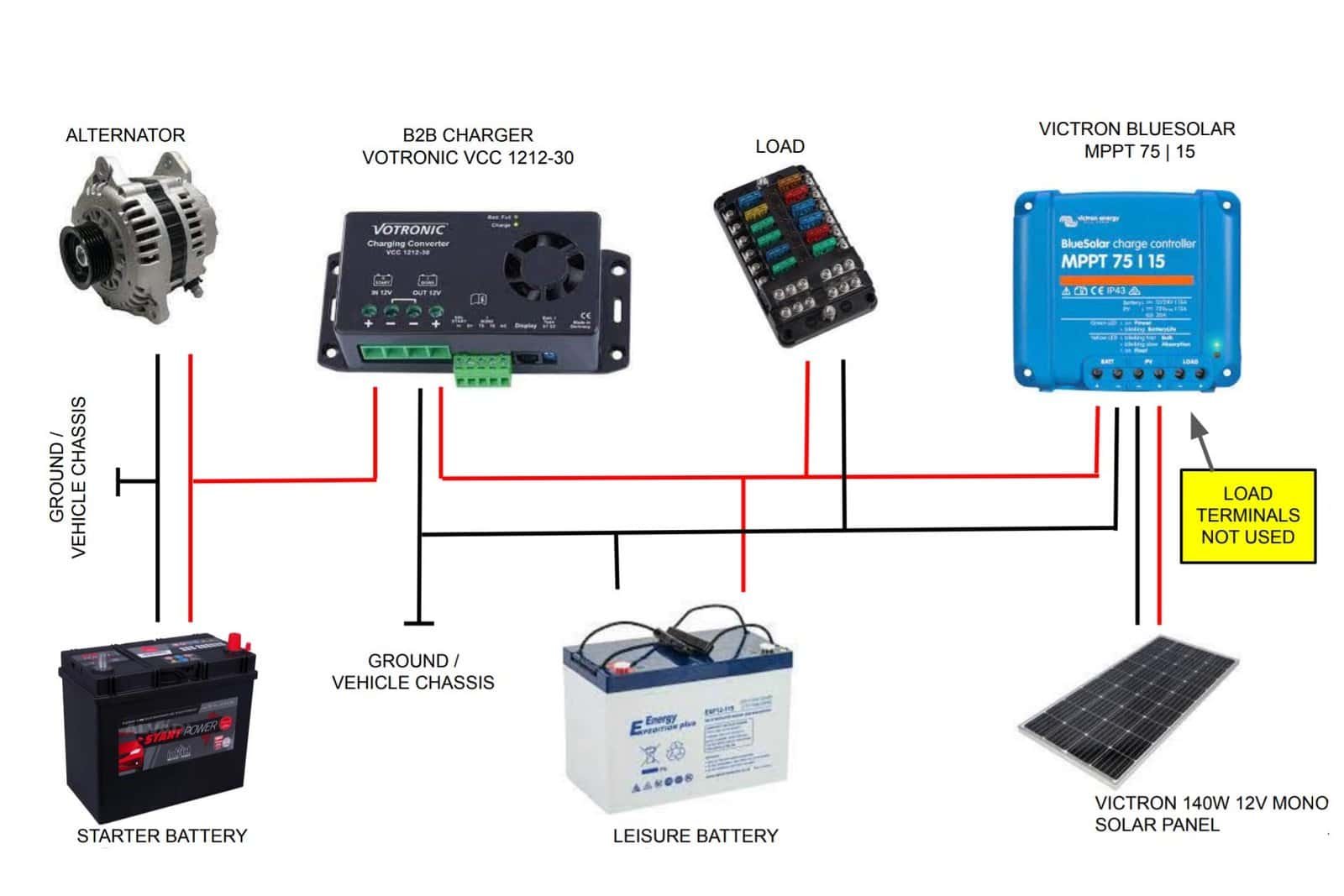
If your leisure batteries are the heart of your campervan electrics, then the alternator is the hidden workhorse. Split charging allows you to harness that power while driving, topping up your leisure bank without lifting a finger. It’s the simplest, most reliable way to keep your fridge cold, lights on, and devices charged - even if solar fails or you’re parked in a shady layby.
The principle is simple: when the engine runs, a system connects your alternator to your leisure batteries. When the engine stops, it disconnects - so you don’t accidentally drain your starter battery. Early systems used basic voltage sensing relays (VSRs), while modern vans increasingly rely on DC-DC chargers for better efficiency and compatibility. Our Campervan Electrical Systems Explained guide introduces how these components fit into the bigger picture.
But it’s not all plug-and-play. With newer Euro 5 and Euro 6 vehicles, smart alternators complicate things by dropping voltage to save fuel. A VSR that once worked perfectly may now fail to charge at all. This is where DC-DC chargers shine - they manage voltage properly, deliver tailored charging profiles, and keep lithium batteries happy. A Renogy DC-DC charger (see our top choice on Amazon below) is a popular upgrade.
Mistakes here are common. Using undersized cables, skipping fuses, or wiring incorrectly can lead to overheating, poor performance, or even fire. It’s not enough to “get power flowing” - it has to be safe, balanced, and compliant. Our Installing a 12v & 240v Campervan System guide stresses why cable sizing and fuse placement are critical parts of a reliable setup.
Understanding the fundamentals of Split Charging & Alternator Wiring is essential for a reliable system.
Another challenge is battery chemistry. AGM, Gel, and Lithium all need different charging voltages and profiles. A relay can’t tell the difference, but a DC-DC charger can. Pairing the wrong charger with the wrong battery shortens lifespan dramatically. Our Best Campervan Batteries & Inverter Setup guide explains why lithium in particular benefits from smart charging systems, especially in relation to Split Charging & Alternator Wiring.
This guide will walk you through everything: VSRs vs DC-DC chargers, smart alternators, cable sizing, wiring diagrams, and safety compliance. We’ll also explore hybrid setups combining split charging with solar for maximum resilience. By the end, you’ll know exactly which system suits your van, how to install it safely, and how to avoid the pitfalls that catch out so many first-time builders.
Whether you’re running a budget weekender or a full-time off-grid build, split charging is a cornerstone of van electrics. Think of it as your backup generator - quiet, automatic, and built into your vehicle already. Get it right, and you’ll drive worry-free, knowing your leisure batteries are charging every time you turn the key. Get it wrong, and you’ll be chasing flat batteries and electrical gremlins.
The Basics of Split Charging
At its simplest, split charging is the process of charging a leisure battery from your vehicle’s alternator while driving. Without it, only your starter battery benefits from engine power, leaving your leisure system dependent on solar or hook-up. Split charging bridges the two systems safely, allowing your alternator to recharge both starter and leisure batteries, while preventing the leisure system from draining your starter battery flat.
Split charging is essential for anyone planning off-grid trips. Even with solar panels, UK weather isn’t always reliable. Driving for just an hour or two can top up batteries, keeping fridges running and devices charged. That’s why many vanlifers treat alternator charging as a backbone, with solar and hook-up as supplements. It’s free energy, generated simply by doing what you already do - driving.
The key difference between starter and leisure batteries explains why split charging is necessary. Starter batteries deliver a quick, powerful burst to crank the engine, but can’t handle deep discharge. Leisure batteries provide steady, long-term power but need regulated charging. Without a split charging system, connecting the two directly risks damaging one or both. A split charge relay kit (see our top choice on Amazon below) bridges this gap safely.
A basic split charging system consists of a relay (or charger), fuses, heavy-duty cabling, and isolators. When the engine runs, the relay or DC-DC charger connects the two systems, sending current into the leisure battery. When the engine switches off, it disconnects, ensuring the starter battery remains protected. Our Installing a 12v & 240v Campervan System guide shows how this integration fits into wider wiring.
Traditionally, voltage sensing relays (VSRs) were the go-to choice. These simple devices detect when the alternator is charging (voltage rises above ~13.6V) and close the circuit. They’re cheap, easy to install, and perfect for older vans. However, as newer vehicles introduced smart alternators, VSRs became less reliable. Our VSR Systems section will cover their pros, cons, and limitations in detail.
Modern builds now favour DC-DC chargers, which not only handle smart alternators but also provide tailored charging profiles for AGM, Gel, or Lithium batteries. These act like intelligent middlemen, ensuring the leisure battery gets the correct voltage and current. A Renogy 30A DC-DC charger (see our top choice on Amazon below) is a popular upgrade in UK builds, particularly for lithium setups where precise charging makes all the difference.
Cable sizing is a critical part of split charging basics. Alternator currents are high - often 30 - 50A - and run lengths can be several metres between engine bay and leisure bank. Using undersized cables creates dangerous heat and voltage drop. Always size correctly based on current and length. Our Best Campervan Batteries & Inverter Setup guide explains how battery size impacts charging current needs.
Every split charge system must include fuses at both ends of the cable run. If a cable shorts against the chassis, these fuses protect against fire. Skipping them is one of the most common DIY mistakes. A split charge fuse and cable kit simplifies this, bundling heavy-duty wire with appropriately rated fuses. Without them, you’re essentially running unprotected live cables through the van.
Safety also extends to isolation switches. These allow you to disconnect the leisure battery from the alternator circuit for maintenance or emergencies. They’re inexpensive but invaluable. A marine-grade battery isolator (see our top choice on Amazon below) is ideal for campervans, offering rugged reliability. Isolators are especially important when troubleshooting, as they let you safely work on one half of the system without risking shorts or sparks.
Split charging doesn’t work in isolation - it’s part of your wider charging ecosystem. Alternator charging provides bulk current while driving, solar tops up when parked, and hook-up guarantees power at campsites. Our Solar Power for Campervans: UK Guide explains how solar complements alternator charging, ensuring batteries stay topped up even when you’re stationary for days. Integration is what makes systems resilient.
For budget conversions, a simple VSR system is often enough. They cost under £100 and can be installed in a few hours. For full-time vans, DC-DC chargers are worth the investment - especially with lithium banks. They cost more (£150 - £300) but protect expensive batteries and guarantee compatibility with modern alternators. It’s a case of spending once to avoid replacing batteries prematurely.
It’s also worth noting that not all vans are created equal. Older pre-Euro 5 engines with “dumb alternators” work perfectly with VSRs. But if you’re running a newer van - Transit Custom, Sprinter, Crafter - you almost certainly need a DC-DC charger. Our Smart Alternators section explains why modern engine management systems demand smarter charging solutions.
Testing is part of the basics too. Once installed, use a digital multimeter (see our top choice on Amazon below) to confirm voltage rises at the leisure battery when the engine runs. If nothing changes, your system isn’t working. Troubleshooting early prevents damaging batteries through undercharging. Our Troubleshooting section walks you through the most common faults and fixes.
In short, split charging is a must-have for any campervan build. Whether you go budget with a VSR or future-proof with a DC-DC charger, the fundamentals remain: correct wiring, fuses, and safe integration. Get the basics right, and you’ll enjoy free, reliable energy every time you drive. In the next section, we’ll dive deeper into VSR systems - how they work and when they’re still relevant.
VSR (Voltage Sensing Relay) Systems
Before DC-DC chargers became common, voltage sensing relays (VSRs) were the standard way to connect starter and leisure batteries. They’re simple devices that detect when the alternator raises voltage above a threshold - typically around 13.6V - and close a circuit to send current to the leisure battery. When voltage drops, they disconnect, protecting the starter battery from being drained while you’re parked.
The biggest advantage of VSRs is simplicity. They contain no complex electronics, so they’re cheap, reliable, and easy to install. For older vans with traditional alternators, they work extremely well. A split charge relay kit can be installed in a couple of hours, often by beginners. Our The Basics of Split Charging section shows how VSRs fit into the wider ecosystem.
VSRs are also budget-friendly. While DC-DC chargers cost £150 - £300, a VSR kit might be £50 - £100. For small AGM systems on a tight budget, that’s a big saving. If you’re building a weekend van and don’t need lithium compatibility, a VSR makes sense. Our Best Campervan Batteries & Inverter Setup shows how AGM banks pair well with simple VSR charging.
Installation is straightforward. Run heavy-duty cables from the starter battery to the leisure battery, with fuses at both ends. The VSR sits in between, automatically connecting and disconnecting based on voltage. Cable gauge must be sized for expected current, usually 30 - 50A. A heavy-duty split charge cabling kit simplifies this with pre-sized cables, fuses, and terminals.
VSRs also come in manual switch variants, which allow you to override the relay. These are useful for emergency jump-starts, letting you use the leisure bank to crank the engine. However, they carry risks if left connected, as they can flatten both banks. Automatic VSRs are generally safer for beginners, as they remove the human error factor.
The main weakness of VSRs is with smart alternators. These alternators deliberately drop output voltage once the starter battery is topped up. A VSR interprets this as “engine off” and disconnects, leaving the leisure battery uncharged. This is why modern Euro 5 and Euro 6 vans often render VSRs unreliable. Our Smart Alternators section explains this in detail.
VSRs also lack charging profiles. They simply pass through whatever voltage the alternator provides. This works for AGM and Gel batteries but isn’t ideal for lithium, which require precise voltages for safe charging. Over time, using a VSR with lithium can shorten lifespan or prevent full charging. A Renogy DC-DC charger (see our top choice on Amazon below) is the safer upgrade path for lithium systems.
Safety must not be ignored. Even a simple VSR system requires correct fusing. Place a fuse within 30cm of both the starter and leisure battery. Without these, a short could turn cables into glowing wires across your van. Our Wiring & Safety section shows exactly where to place fuses for maximum protection.
Heat is another consideration. VSRs can pass large currents - up to 140A in some units. Cheap relays may overheat under sustained load. Look for models rated above your alternator’s output and install them in ventilated locations. A Durite 140A VSR (see our top choice on Amazon below) is a trusted choice in UK builds, balancing cost and durability.
Despite their limitations, VSRs still have a place. For older vans, weekenders, or budget builds, they remain the simplest way to keep leisure batteries charged. They’re especially appealing if you’re running small AGM banks and don’t need the complexity of lithium systems. Our Campervan Electrical Systems Explained guide reinforces that not every build needs the most advanced tech.
Resale value is worth considering. While VSR systems work fine, buyers increasingly expect DC-DC chargers in modern vans. A van advertised with “split charge relay” may appear dated compared to one with “Renogy DC-DC charger.” If you’re building to sell, think carefully - sometimes spending extra upfront pays off when it comes to resale.
Troubleshooting VSRs is usually simple. If your leisure battery isn’t charging, check alternator voltage first. If it rises above 13.6V but the relay doesn’t click, the unit may be faulty. If it does click but no current flows, suspect a blown fuse or loose connection. A digital multimeter is essential for confirming voltages and continuity.
Maintenance is minimal. Check cabling for heat, ensure fuses are intact, and listen for the relay’s click when starting the engine. If you don’t hear it, something’s wrong. Otherwise, VSRs run quietly in the background, doing their job without intervention. Simplicity is their biggest selling point - and why they’re still popular despite the rise of smarter alternatives.
In summary, VSRs are an affordable, reliable way to charge leisure batteries - provided your van has a traditional alternator and AGM or Gel batteries. They’re not suited to lithium or smart alternators, but they remain relevant for many DIYers. In the next section, we’ll look at DC-DC chargers, the modern replacement for VSRs that brings smarter charging and wider compatibility.
DC-DC Chargers (The Modern Solution)
As campervans evolved, so did their electrical systems. Enter the DC-DC charger, the modern replacement for basic voltage sensing relays. Instead of simply connecting batteries together, DC-DC chargers regulate current and voltage, delivering exactly what your leisure battery needs. This makes them compatible with smart alternators, AGM, Gel, and especially lithium batteries. They’re now considered essential in most modern UK conversions.
The biggest advantage of DC-DC chargers is charging profiles. Unlike VSRs, which pass raw alternator voltage, DC-DC units tailor output to the battery type. Lithium requires specific voltages to charge fully and safely; AGM prefers staged charging. A Renogy 30A DC-DC charger (see our top choice on Amazon below) allows you to select the correct profile, ensuring your expensive batteries last longer and perform better.
They also solve the smart alternator problem. Modern Euro 5 and Euro 6 vans reduce alternator voltage once the starter battery is topped up, leaving VSRs useless. DC-DC chargers ignore these fluctuations, drawing current consistently and converting it into stable charging. Our Smart Alternators section explains why this makes DC-DC units indispensable for anyone with a newer vehicle.
DC-DC chargers come in different amperages, usually 20A, 30A, or 50A. The size you choose depends on your alternator’s output and your leisure battery capacity. A 30A unit is common for most vans, while larger setups with big lithium banks may benefit from a 50A model. A Renogy 50A DC-DC charger is popular with full-time vanlifers.
Installation is straightforward but requires care. The charger is wired between the starter and leisure batteries, with fuses at both ends. It needs an ignition feed so it only operates when the engine runs. Cabling must be sized correctly for current and length. Our Wiring & Safety section provides guidance on cable thickness, routing, and fuse placement for safe installs.
Some DC-DC chargers also integrate solar inputs, acting as combined chargers. These units accept alternator and solar power simultaneously, reducing the need for separate controllers. The Renogy DCC50S (see our top choice on Amazon below) is a popular hybrid unit, ideal for compact builds. Our Integrating Charging Systems guide explains why hybrid charging simplifies installs and makes systems more efficient.
DC-DC chargers also protect your alternator. Unlike VSRs, which can dump large loads suddenly, DC-DC chargers regulate draw smoothly. This reduces strain on the alternator and prevents overheating. For vans with high electrical demands, this protection is invaluable. Our Best Campervan Batteries & Inverter Setup guide explains how regulated charging extends both alternator and battery lifespan.
Another benefit is expandability. As your needs grow, you can often upgrade from 20A to 30A or 50A units without rewiring everything. Many brands design chargers as modular, making upgrades easy. This is crucial if you start with AGM and plan to switch to lithium later. A Victron Orion-Tr Smart DC-DC charger (see our top choice on Amazon below) is particularly popular for future-proofing.
Costs are higher than VSRs, typically £150 - £300 depending on brand and amperage. While this may sting upfront, the long-term savings are clear. Protecting a £1,000+ lithium battery bank is worth the investment. Cheap relays often shorten battery life, forcing replacements far earlier than expected. Think of DC-DC chargers as insurance for your electrics.
Efficiency is another win. DC-DC chargers optimise charging, often reaching 95% efficiency compared to raw alternator voltage. This means faster charging, better energy use, and healthier batteries. For digital nomads or heavy users, these gains add up daily. Our Monitoring & Power Management section shows how apps track efficiency in real time, giving you full visibility.
Maintenance is minimal. Most DC-DC chargers are solid-state, with no moving parts. Once installed, they require little attention. Check cabling and fuses periodically, but otherwise they run quietly in the background. Firmware updates via Bluetooth apps (on some models) add features and improvements, making them smarter over time. This adaptability makes them a long-term investment.
Troubleshooting is straightforward. If batteries aren’t charging, check ignition feed, fuse integrity, and alternator voltage. A digital multimeter is essential. Many DC-DC chargers include status LEDs or Bluetooth diagnostics, making it easier to spot issues. Compared to the “click and hope” of VSRs, DC-DC units are far more user-friendly when it comes to fault finding.
Resale value is a hidden benefit. Buyers increasingly expect to see a DC-DC charger in modern conversions.
https://theferalway.com/split-charging-alternator-wiring/


Comments
Post a Comment