Best Wild Camping Spots in the UK (2025)
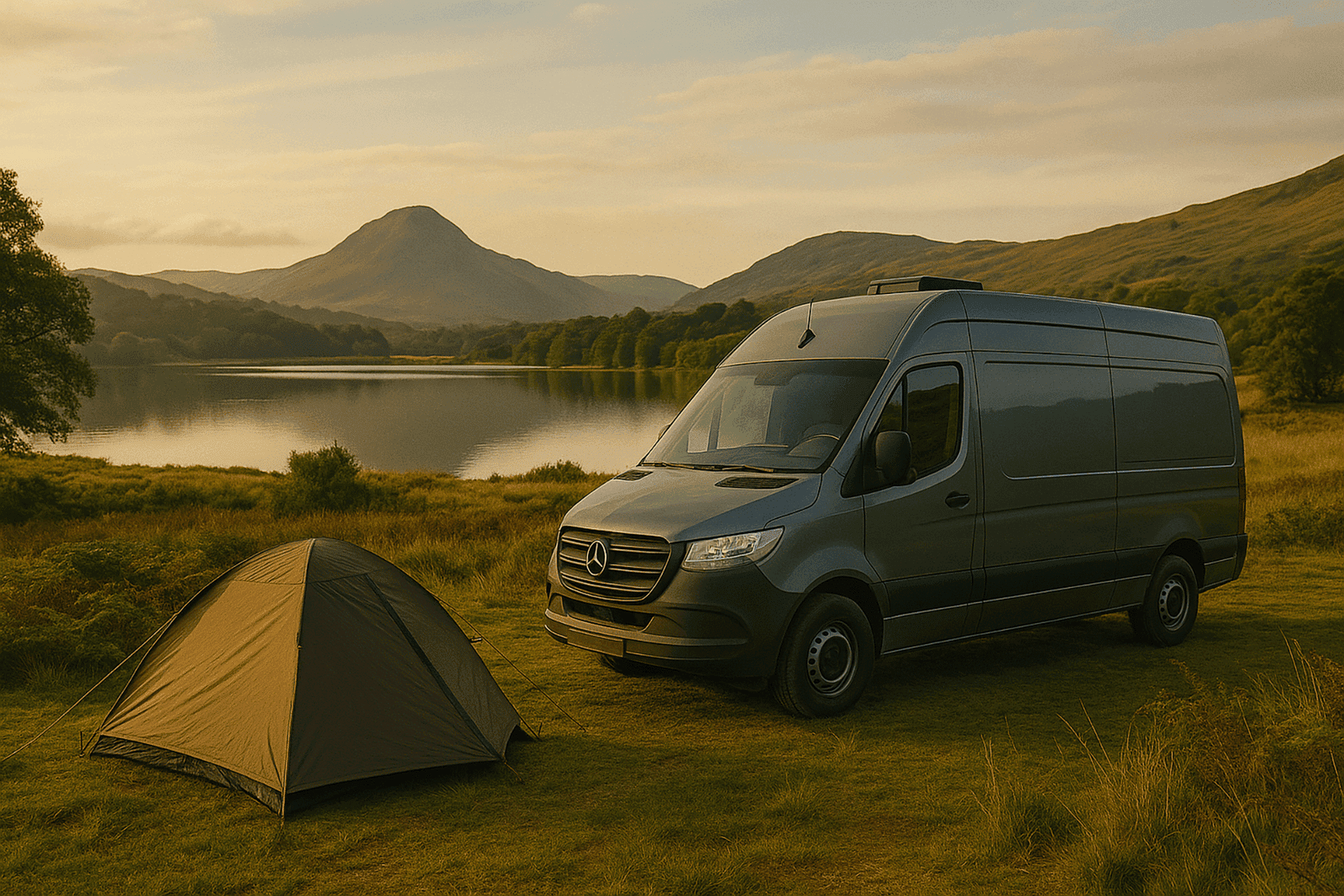
I've been moved on a few times in five years of wild camping. Twice by police, seven times by landowners, three times by wardens, and twice by angry farmers who found me at dawn and made their feelings very clear.
I've also successfully wild camped so many nights without issues. I've woken up to Scottish sunrises over lochs, Welsh mountain views, Cornish coastal dawns, and Peak District mists. I've parked in lay-bys, forestry commission car parks, beach access roads, and remote farm tracks.
Here's what I've learned: wild camping in the UK exists in a grey area between technically illegal trespassing and tolerated common practice. The law says one thing. Reality is different. Success depends on understanding both.
This isn't another article listing "wild camping spots" that are actually paid campsites or showing you photos of vans parked in prohibited areas. This is the reality of wild camping in the UK — what's actually legal, what's tolerated, where you'll get moved on, and how to do it without being a dickhead.
In this guide, I will share some of the best wild camping spots in the UK that I've discovered during my adventures.
I'll tell you about spots that work, spots that look perfect but always get you moved on, and the tactics that actually keep you under the radar. I'll cover the legal situation in each country (it's different), the unwritten rules that matter more than the written ones, and what happens when it goes wrong.
Because it will go wrong sometimes. You'll misjudge a spot. You'll park somewhere that seemed fine but turns out to be someone's driveway. You'll wake up to a farmer knocking on your window. And you need to know how to handle it.
Let's get into it.
The Legal Reality: It's Complicated
Right, let's sort out the legal situation because everyone gets this wrong.
Scotland: Actually Legal (Mostly)
Scotland has the Land Reform (Scotland) Act 2003, which gives everyone the right to access most land for recreational purposes, including wild camping. This is real, actual, legal wild camping.
The rights:
- Camp on most unenclosed land
- Stay for 2-3 nights in one spot
- Access most hills, mountains, moors, forests
- Use motorhomes and campervans (with restrictions)
The restrictions:
- Not on enclosed agricultural land (fields with crops/livestock)
- Not within sight of houses (generally 100m+ away)
- Must follow Scottish Outdoor Access Code
- Some areas have camping management zones (Loch Lomond, Trossachs)
- Must leave no trace
What this means in practice:
You can legally park your van on forestry tracks, in remote car parks, by lochs (if there's access), on moorland passing places, and in the Highlands. As long as you're discrete, respectful, and leave no trace, you're exercising your legal right.
I've wild camped in Scotland dozens of times. Never been moved on when following the rules. It's brilliant.
England and Wales: Technically Illegal, Practically Tolerated
There's no right to wild camp in England and Wales. Legally, parking overnight on someone's land without permission is trespassing (civil offence, not criminal). But:
The reality:
- Wild camping happens constantly
- Authorities mostly tolerate discrete camping
- Being moved on is the worst consequence (usually)
- Some areas actively tolerate it
- Others enforce no overnight parking
The trespassing law:
Trespassing is civil, not criminal. The landowner can ask you to leave. If you refuse, they can pursue civil action. But they rarely do because:
- It's expensive
- It's effort
- Most campers leave when asked
- You're not causing damage
What actually happens: someone asks you to move, you move, end of story.
Exception - Criminal trespassing:
You can be criminally prosecuted for trespassing if:
- You're causing damage
- You're part of a group (6+ vehicles)
- You're on specific protected land
- You refuse to leave when asked by authorities
Single campervan, causing no damage, leaving when asked? Civil matter only.
Northern Ireland: Restrictive
Northern Ireland has no wild camping rights and stricter enforcement than England/Wales. Most land is private. Authorities are less tolerant. I've camped there twice, got moved on once. It's doable but harder.
The practical legal position:
Scotland: Do it legally and freely
England/Wales: Do it discretely and respectfully, expect occasional moving on
Northern Ireland: Find campsites or be very discrete
The Scottish Highlands: Where It's Actually Legal
Right, Scotland first because it's easiest. Here are some of the best wild camping spots I've used successfully, sometimes multiple times.
1. Glen Etive (Scottish Highlands)
What it is: Long single-track valley road with multiple pull-offs and parking areas alongside a river.
GPS starting point: Glen Etive, PA39 (multiple spots along the glen)
Why it works:
Glen Etive is famous among wild campers because it's legal, accessible, and stunning. The single-track road follows the river with dozens of informal parking spots. You're camping on unenclosed land with no nearby houses.
I've stayed here four times. Once had six other campervans nearby (everyone spread out, everyone quiet). Never been disturbed. No facilities, no hassle, no problems.
What to know:
- Gets busy in summer (15+ vans some nights)
- Midges are brutal June-August
- No facilities (pack out everything)
- Some spots better than others (drive the whole glen)
- Can be boggy after rain
- Occasionally used by film crews (Skyfall was filmed here)
Best time: September-October (fewer midges, fewer vans, stunning colors)
Facilities: None. Nearest services in Glencoe village (20 min drive).
2. North Coast 500 Lay-bys (Scottish Highlands)
What it is: The NC500 route has dozens of suitable overnight spots, from forestry car parks to coastal passing places.
My favorites:
- Achmelvich Beach car park (NC500, near Lochinver) - coastal, often has 3-4 vans
- Bealach na Bà viewpoint (Applecross Pass) - dramatic mountain pass, gets cold
- Clashnessie Beach - small parking area, stunning beach
Why it works:
The NC500 is designed for touring. Authorities know campervans use it. Discrete overnight parking is tolerated as long as you're respectful.
I've used various NC500 spots eight times over two trips. Moved on once (private car park, I'd missed the sign). Otherwise fine.
What to know:
- Some spots marked "no overnight parking" - respect this
- Coastal spots get windy
- Facilities are sparse (plan ahead)
- Summer gets busy (50+ vans in some areas)
- Locals sometimes tired of NC500 tourists (be extra respectful)
Best time: May or September (after/before peak, better weather than winter)
Facilities: Scattered. Fuel and shops in Ullapool, Durness, Lochinver, Applecross.
3. Loch Rannoch (Perthshire)
What it is: Quieter alternative to more famous Loch Lomond. Forestry Commission car parks and lochside access points.
GPS: Loch Rannoch, PH17 - multiple spots along south shore
Why it works:
Less famous than Loch Lomond means fewer vans and less enforcement. The south shore has several forestry car parks that tolerate overnight stays. It's proper wild camping but accessible.
I've stayed here twice, both times completely alone. Once in October (freezing but beautiful), once in May (midges, less beautiful).
What to know:
- South shore easier access than north
- Some car parks have height barriers
- Gets very cold in winter
- Good hiking access (Schiehallion nearby)
- Midges in summer
Best time: October-November (autumn colors, fewer midges)
Facilities: Village of Kinloch Rannoch has shop, pub. Limited.
4. Glenmore Forest Park (Cairngorms)
What it is: Forestry Commission managed forest with designated parking areas near Aviemore.
GPS: Glenmore Forest Park, PH22 1QU
Why it works:
The Forestry Commission tolerates discrete overnight parking in many locations. Glenmore has several car parks that work. You're technically meant to move every 2 nights, but enforcement is light.
I stayed three nights here in January. Snowed in, -8°C, amazing. Saw four other vans over three days. No one bothered us.
What to know:
- Some car parks better than others
- Rangers occasionally check (polite, just ensuring compliance)
- Good facilities nearby (Aviemore 15 min)
- Busy in ski season (December-March)
- Midges in summer
Best time: Winter for skiing, October for hiking
Facilities: Aviemore has everything (supermarkets, fuel, outdoor shops)
5. Isle of Skye Coastal Spots
What it is: Various coastal access points and forestry car parks across Skye.
My spots:
- Staffin Beach car park - often has 2-3 vans
- Elgol - parking area, stunning Cuillin views
- Glenbrittle - beach access, climber's paradise
Why it works:
Skye is touristy but tolerates van camping in many areas. Coastal access points are legal wild camping spots. Discrete parking is generally fine.
Used Skye spots six times. Moved on once (private land, I'd misread access). Otherwise successful.
What to know:
- Gets very busy in summer (too busy)
- Some areas have overnight parking bans (Fairy Pools, Quiraing)
- Wind is constant and fierce
- Facilities scattered
- Midges are legendary in summer
Best time: May or October (avoid summer crowds)
Facilities: Portree has full services, other villages limited
England: The Tolerated Grey Area
England has no legal wild camping, but these spots work through toleration or obscurity.
6. Dartmoor National Park (Devon)
What it is: One of the few places in England with quasi-legal wild camping (for tents) that extends to discrete van parking in some areas.
GPS starting point: Dartmoor, Devon - various car parks
Why it works (sort of):
Dartmoor has backpacking wild camping rights on certain commons. While this doesn't technically extend to vehicles, some car parks tolerate overnight stays. It's a grey area.
I've stayed on Dartmoor five times. Moved on twice (wrong car park, private land). Three times fine. Success rate: 60%.
What to know:
- Stick to larger forestry/national park car parks
- Avoid private car parks (common near villages)
- Rangers sometimes check (usually just informing, not moving on)
- Gets boggy and cold
- Ponies will investigate your van
Best spots:
- Postbridge car park - popular, usually tolerated
- Burrator Reservoir - forest car parks
- Two Bridges - hit and miss
Best time: September-October (avoid summer tourists and winter weather)
Facilities: Villages on edge of moor (Princetown, Postbridge, Widecombe)
7. Forest of Dean (Gloucestershire)
What it is: Forestry Commission woodland with multiple car parks that mostly tolerate overnight parking.
GPS: Forest of Dean, GL16 - various car parks
Why it works:
Forestry Commission is generally tolerant of discrete overnight parking. Forest of Dean has dozens of car parks. Some officially prohibit overnight parking, others don't mention it.
I've used Forest of Dean six times over three years. Never moved on. Multiple nights in same spot without issue.
What to know:
- Check for "no overnight parking" signs
- Some car parks have height barriers
- Can be muddy after rain
- Good cycling and hiking
- Near Wales border (easy to combine)
Best spots:
- Mallards Pike Lake - larger car park, usually fine
- Beechenhurst - popular but tolerated
- Cannop Ponds - scenic, often 1-2 other vans
Best time: Year-round (mild climate)
Facilities: Coleford and Cinderford have shops/services
8. Northumberland Coast (Northumberland)
What it is: Coastal access points, beach car parks, and forest car parks along relatively quiet coastline.
My spots:
- Beadnell Bay - large car park, often has vans
- Low Newton - small village car park
- Druridge Bay - country park car parks
Why it works:
Northumberland is less touristy than Cornwall or Devon. Many coastal car parks tolerate overnight parking. It's not explicitly legal, but enforcement is rare.
I've used Northumberland spots four times. Never moved on. Often alone or with 1-2 other vans.
What to know:
- Some beach car parks have height barriers
- Check for overnight parking signs
- Can be very windy
- Seals on some beaches (keep distance)
- Cold even in summer
Best time: May-June (long daylight, before peak season)
Facilities: Small villages have basics, Alnwick for major shops
9. Kielder Forest (Northumberland)
What it is: Huge forestry commission forest with multiple car parks and forest tracks.
GPS: Kielder Forest, NE48 - various access points
Why it works:
Kielder is remote and massive. Forestry Commission tolerates discrete parking. Multiple suitable spots spread across huge area.
I've stayed here twice. Both times completely alone. No one checked on me. One of the most remote-feeling spots in England.
What to know:
- Very remote (nearest services 30+ minutes)
- Phone signal patchy/non-existent
- Dark Sky Park (amazing stars)
- Gets very cold at night
- Forest tracks can be rough
Best time: Summer for warmth, winter for stars
Facilities: Kielder village has basics, but it's remote. Stock up before arriving.
10. North York Moors (Yorkshire)
What it is: National Park with moorland roads, forest car parks, and coastal access.
My spots:
- Hole of Horcum - popular viewpoint car park
- Ravenscar - coastal village car park
- Sutton Bank - large car park with views
Why it works:
North York Moors National Park is generally tolerant. Many car parks see overnight vans regularly. Enforcement is light.
I've used North York Moors three times. Moved on once (private car park near Whitby). Otherwise fine.
What to know:
- Some spots get busy with other vans
- Moorland spots can be very cold
- Good hiking and cycling
- Easier access than remote Scotland
Best time: September-October (heather in bloom, fewer tourists)
Facilities: Villages throughout (Helmsley, Pickering, Whitby)
Wales: Beautiful But Stricter
Wales has tightened wild camping enforcement recently, but discrete spots still work.
11. Snowdonia Forestry Car Parks (Gwynedd)
What it is: Forestry Commission car parks in Snowdonia National Park.
GPS: Snowdonia, LL - various car parks (Betws-y-Coed area)
Why it (sometimes) works:
Snowdonia has cracked down on overnight parking in popular spots, but forestry car parks away from main tourist areas still tolerate discrete camping.
I've stayed in Snowdonia five times. Moved on three times (popular spots like Pen-y-Pass). Successful twice (quieter forestry car parks).
What to know:
- Many popular spots now have overnight parking bans
- Enforcement increased significantly 2020-2023
- Forestry car parks better than National Park car parks
- Very wet climate
- Success rate lower than Scotland
Better spots:
- Beddgelert Forest - several car parks, quieter
- Gwydyr Forest - near Betws-y-Coed, less touristy
Best time: September-October (avoid summer crowds)
Facilities: Betws-y-Coed, Llanberis, Beddgelert have services
12. Pembrokeshire Coast (Southwest Wales)
What it is: Coastal access car parks and clifftop spots along stunning coastline.
My spots:
- Whitesands Bay - large car park, sometimes tolerated overnight
- St Davids Head - remote car park
- Newport Parrog - small coastal village
Why it works (sometimes):
Pembrokeshire is touristy but some spots tolerate overnight parking. It's hit and miss. Enforcement varies by location and season.
I've used Pembrokeshire four times. Moved on twice (rangers checking popular spots). Successful twice (quieter beaches).
What to know:
- Popular beaches enforce strictly
- Quieter spots more tolerant
- Coastal wardens patrol in summer
- Beautiful but busy
- Success rate: 50%
Best time: May or September (before/after peak)
Facilities: St Davids, Tenby, Fishguard have full services
Coastal Car Parks: The National Issue
Nearly every coastal area in the UK now has "no overnight parking" signs. But the reality is more nuanced.
Why the bans exist:
- Tourism overload (Cornwall, Pembrokeshire, Scotland)
- Local resident complaints (noise, rubbish)
- Campsite lobbying (losing business to free camping)
- Toilet waste dumping (some idiots ruin it for everyone)
What actually happens:
Many bans aren't enforced overnight. Wardens work 9am-5pm. If you arrive at 8pm and leave by 8am, often no one checks. But this isn't guaranteed.
My coastal parking strategy:
- Avoid obvious tourist spots (too much enforcement)
- Choose larger, less popular car parks
- Arrive late (after 8pm), leave early (before 8am)
- Move every night (don't take the piss)
- Be prepared to move if asked
- Have backup spot identified
Coastal spots that still work (sometimes):
- North Norfolk coast - several beaches tolerate overnight
- Dungeness - isolated, often has vans
- Scottish west coast - legal wild camping applies
- Northumberland beaches - less enforcement
Coastal spots that don't work:
- Cornwall in summer - forget it, totally enforced
- Pembrokeshire popular beaches - strict enforcement
- Loch Lomond shores - camping management zones
- Anywhere with clear signage and barriers
Lay-bys and Verges: The Last Resort
Lay-bys on A-roads and B-roads are legal to park in overnight (with restrictions). But they're often noisy, unsafe, or unsuitable.
When lay-bys work:
- Rural areas with low traffic
- Larger lay-bys with space for multiple vehicles
- Away from junctions and bends
- Quiet B-roads, not A-roads
When they don't:
- A-roads (constant truck traffic)
- Near population centers (noise, security)
- Small lay-bys (blocking access)
- Bends or junctions (unsafe)
My lay-by experiences:
I've stayed in lay-bys maybe 20 times. It's always my last choice. The noise from trucks at night is miserable. I only use lay-bys when I've misjudged timing and need somewhere legal to stop.
Better alternatives:
- Forestry car parks
- Quiet village car parks (ask at pub first)
- Farm tracks (ask permission)
- Services with overnight parking (some Tesco car parks)
The Unwritten Rules That Matter More Than Law
Right, here's what actually keeps you out of trouble. Follow these and you'll rarely have issues.
Rule 1: Arrive Late, Leave Early
The golden timing:
Arrive: After 8pm
Leave: Before 9am
Most enforcement happens during working hours.
https://theferalway.com/best-wild-camping-spots-in-the-uk-legal-guide/


Comments
Post a Comment