Designing the Perfect Campervan Layout
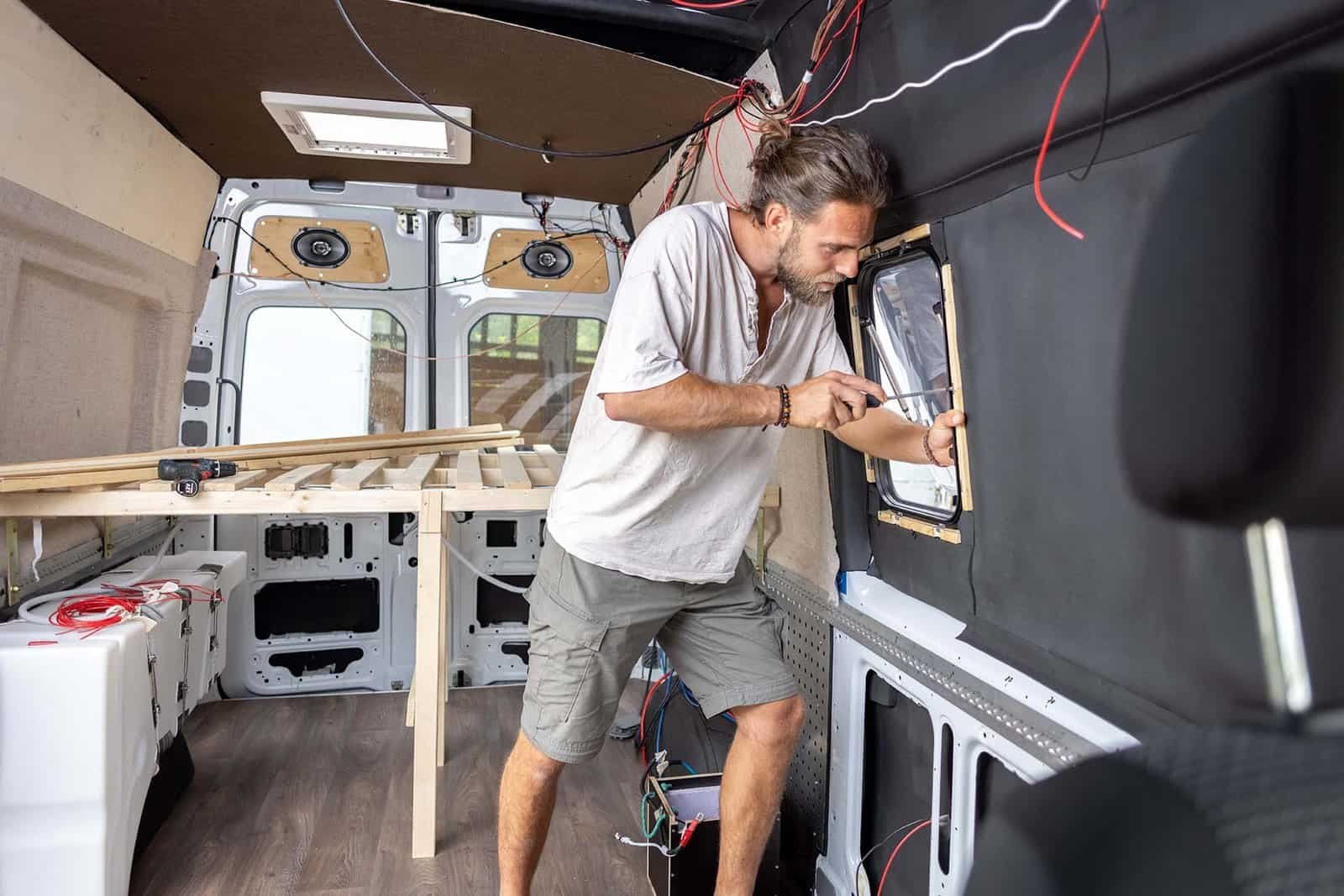
I've built four campervans. The first layout was so bad I couldn't actually cook standing up. The second looked beautiful in photos but was completely impractical for real life. The third was better but I still couldn't fit bikes inside without removing the bed. The fourth? Finally got it mostly right. This journey has taught me the importance of a Perfect Campervan Layout.
Between those four builds, I've redesigned layouts completely three times, made £850 worth of furniture I had to scrap and rebuild, and learned that what looks perfect on paper often doesn't work when you're trying to cook pasta while your partner is trying to get changed and the dog is trying to exist in the same space.
This guide is everything I wish I'd known before I drew my first layout plan. Not the theory. Not the Instagram-perfect versions. The actual reality of living in a small metal box and how to design a space that works for your real life, not someone else's aesthetic.
This guide is everything I wish I'd known before I drew my first layout plan. Not the theory. Not the Instagram-perfect versions. The actual reality of living in a small metal box and how to design a space that works for your real life, not someone else's aesthetic. A good design is the key to achieving the Perfect Campervan Layout.
Why Layout Design Matters More Than Anything Else
Here's the truth: you can fix bad insulation. You can upgrade your electrical system. You can repaint walls. But a fundamentally bad layout? That requires ripping everything out and starting again.
I know because I've done it. Twice.
Van #2: Beautiful L-shaped kitchen, gorgeous overhead storage, lovely dinette area. Completely useless. I couldn't stand up where I needed to. The dinette ate space we never used. The overhead storage blocked the window. After six months of frustration, I ripped out £650 worth of furniture and rebuilt it.
Van #3: Much better, but I built permanent furniture everywhere. Looked great. Then we got bikes and realized we couldn't fit them inside without dismantling half the interior. Spent another £200 making furniture modular.
What a good layout does:
- Lets you actually live comfortably in the space
- Makes daily tasks easy (cooking, sleeping, changing clothes)
- Stores everything you actually need
- Adapts to different trips (weekend vs. month-long)
- Doesn't waste space on things you never use
- Works for YOUR specific needs (not Instagram's)
What a bad layout does:
- Forces you into awkward positions constantly
- Makes simple tasks frustrating
- Leaves you with nowhere to put essential items
- Looks great but doesn't function well
- Follows someone else's idea of perfect
Layout design isn't creative expression. It's practical problem-solving. The best layout is the one you forget about because everything just works.
Understanding Your Real Constraints
Before you draw a single line, understand what you're actually working with.
Van Size Reality Check
I've worked with different sizes. Here's the usable space reality:
VW Transporter T5/T6 (SWB)
- Cargo area: 1.7m long x 1.7m wide x 1.4m high (standard roof)
- Usable space: About 4 cubic metres
- Standing height: No (unless you install a pop-top)
- Reality: Cosy. Very cosy. Works for weekends or one person full-time.
Ford Transit Custom (MWB, medium roof)
- Cargo area: 2.6m long x 1.7m wide x 1.75m high
- Usable space: About 7.7 cubic metres
- Standing height: Yes, if you're under 1.83m (6ft)
- Reality: Sweet spot for most people. Enough space without being massive.
Mercedes Sprinter (MWB, high roof)
- Cargo area: 3.2m long x 1.8m wide x 1.9m high
- Usable space: About 11 cubic metres
- Standing height: Yes, properly (2m internal height)
- Reality: Luxurious amount of space. Pain to park. Overkill for weekends.
Mercedes Sprinter (LWB, high roof)
- Cargo area: 4.3m long x 1.8m wide x 1.9m high
- Usable space: About 14.7 cubic metres
- Standing height: Yes, everywhere
- Reality: This is a small house. Also won't fit most UK car parks.
What size do you actually need?
I've lived in a SWB Transporter and now have a MWB Transit Custom. Here's my honest assessment:
Choose SWB if:
- Weekend trips only (max 1-2 weeks)
- Solo or couple without pets
- You prioritize city parking and stealth
- You're okay without standing height
- Budget is tight (smaller = cheaper everything)
Choose MWB if:
- Regular trips (weeks at a time)
- Couple with dog, or small family
- You want standing height
- You want a real kitchen and storage
- You'll use it 30+ nights per year
Choose LWB if:
- Full-time or near full-time living
- You want a wet room/toilet
- You need office space inside
- You're okay with parking challenges
- You have the budget (bigger = more expensive everything)
My recommendation: For most UK-based people doing serious weekends and occasional longer trips, MWB with medium-to-high roof is the sweet spot. Big enough to be comfortable, small enough to be practical.
Understanding Your Actual Usage
Before you design anything, honestly answer these questions:
How will you actually use the van?
- Weekend trips (2-3 nights)
- Week-long holidays
- Extended tours (2-4 weeks)
- Full-time living
- Occasional camping (10-20 nights/year)
Be honest. Most people design for full-time living but use it 15 nights a year. That's wasted space and money.
Who's using it?
- Solo
- Couple
- Family with kids
- With pets
- Friends occasionally
What activities?
- Beach camping (need outdoor shower, sand management)
- Mountain adventures (need bike storage, hiking gear space)
- Festivals (need party supplies, more seating)
- Work travel (need desk space, good lighting, power)
- Photography trips (need gear storage, work surface)
What season?
- Summer only (different needs than winter)
- Year-round (need serious heating, insulation matters more)
- Shoulder season mostly (spring/autumn - easier)
I designed van #1 for long weekends. I used it maybe 40 nights that year. All that space for a shower and toilet? Wasted. Van #4 is designed for 80-100 nights per year with occasional longer trips. Much more practical.
Physical Constraints You Can't Change
Your height matters enormously.
I'm 1.78m (5'10"). My wife is 1.5m (5'9"). We can both stand in a medium roof Transit Custom. Just.
My mate is 1.93m (6'4"). He can't stand in anything except a high roof. This fundamentally changes layouts - if you can't stand up, you build differently.
Your mobility matters.
Can you:
- Climb over furniture to get to the bed?
- Squat down to access under-bed storage?
- Reach overhead cupboards?
- Step up into the van easily?
I'm reasonably fit but my knees aren't great. I avoid layouts requiring constant climbing over things.
Your sleeping position matters.
- Side sleeper: Need minimum 1.2m width, prefer 1.4m
- Back sleeper: Can manage 1.1m width
- Couple: Need 1.4m minimum, 1.6m is comfortable
- Restless sleeper: Want space to spread out
Your cooking habits matter.
- Rarely cook: Tiny kitchen is fine
- Cook proper meals: Need worktop space, storage for ingredients
- Coffee only: Just need a kettle and mug storage
- Breakfast cook: Need space for multiple pans
Don't design a massive kitchen if you eat out most of the time. Don't design a tiny one if you actually cook.
The Essential Zones (And How Much Space They Actually Need)
Every van needs certain functional areas. Here's the reality of how much space each actually requires.
Zone 1: Sleeping Area (Priority 1)
You spend 8 hours here every night. Get this wrong and everything else is miserable.
Minimum dimensions:
- Solo: 1.9m x 1.0m (tight but manageable)
- Comfortable solo: 1.9m x 1.2m
- Couple minimum: 1.9m x 1.3m (we tried this - too narrow)
- Couple comfortable: 1.9m x 1.4m
- Couple luxury: 1.9m x 1.6m
- With dog/kids: 1.9m x 1.6m minimum
Don't compromise on length. 1.9m is absolute minimum unless you're very short. I'm 1.78m and need every bit of 1.9m.
Bed position options:
Across the back (what I use):
- Pros: Uses full width (1.7m+), easy access, loads of storage underneath, simple to build
- Cons: Takes up 1.9m of length, limits rear access
- Best for: MWB and LWB vans where length isn't critical
Side-to-side along one wall:
- Pros: Leaves rear open, can fold up for garage space, versatile
- Cons: Limited width (max 1.2m typically), difficult to make comfortable for couples
- Best for: Solo travelers, SWB vans, people who need bike storage
Rock and roll bed:
- Pros: Doubles as seating, quick conversion, saves space during day
- Cons: Expensive (£1,200-£2,500), uncomfortable compared to proper bed, limits rear door access
- Best for: Weekend warriors who want day-time seating space
Pull-out/extending bed:
- Pros: Saves daytime space, can create larger sleeping area
- Cons: Complex mechanism, stuff must be cleared before sleeping, more things to break
- Best for: People who use van during day for working/living
Roof pop-top bed:
- Pros: Doesn't use floor space, kids love it, adds standing height
- Cons: Expensive (£2,500-£5,000 installed), cold in winter, can't use in high winds
- Best for: Families, people who need maximum floor space
My experience:
Van #1: Rock and roll bed (£1,450)
- Uncomfortable. Really uncomfortable. The cushions were hard, the frame was uneven, and I couldn't get a proper mattress on it.
- Useful as seating but we barely used it as seating.
- Sold it for £800 and built a fixed bed.
Van #2-4: Fixed bed across the back (1.9m x 1.4m)
- Cost: £180 in materials
- Comfortable with a proper 10cm memory foam mattress (£285)
- Massive storage underneath (split into sections with plastic boxes)
- Can remove front section (4 bolts) for bike access if needed
- No regrets. This is what I'd build again.
Bed construction tips:
What worked:
- 18mm ply base
- 47mm x 75mm timber frame
- Slats across the top (18 slats, 50mm spacing)
- Allows airflow under mattress (prevents moisture)
- Front section bolted (removable), back section screwed (permanent)
What didn't work:
- Solid ply base (no airflow - mattress got damp)
- Too-narrow slats (sagged under weight)
- Not securing it properly (moved while driving - terrifying on motorway)
Zone 2: Kitchen (Priority 2)
You need to cook. Even if it's just heating beans and boiling water for coffee.
Minimum kitchen:
- Worktop: 60cm x 40cm
- Hob: Two burner (you don't need four)
- Storage: 30L for food and cooking equipment
- Sink: 30cm diameter (or skip it entirely)
Comfortable kitchen:
- Worktop: 90cm x 50cm
- Hob: Two burner gas or single induction
- Storage: 60L minimum (cupboard + drawer)
- Sink: 35cm diameter with draining board
Luxury kitchen:
- Worktop: 120cm x 50cm
- Hob: Three burner or two-burner + grill
- Storage: 100L+ (multiple cupboards)
- Sink: 40cm double bowl
- Fridge: 40L+ compressor (separate from kitchen but counts)
What you DON'T need:
An oven. I've built one (van #2). Used it four times. It heated the van unbearably, used loads of gas, and took up space I needed for storage. Ripped it out after a year.
A four-burner hob. Unless you're cooking for six people regularly, two burners is plenty. I cook full roast dinners on two burners. Stew in one pan, veg in the other. Easy.
A massive sink. I've had everything from a 25cm bowl to a 40cm double-bowl sink. The sweet spot is 30-35cm single bowl. Big enough to wash pans, small enough not to dominate the worktop.
Kitchen layout options:
Side kitchen (galley style):
- Kitchen units along one side
- Usually 80-120cm long
- Worktop, hob, sink in a line
- Storage underneath
Pros: Efficient workflow, everything in reach, easy to build Cons: Can block one side of van, limits width for other things
L-shaped kitchen:
- Kitchen along one side and across the back
- More worktop space
- Can separate wet (sink) and cooking zones
Pros: Loads of worktop, feels spacious, very functional Cons: Takes up lots of floor space, expensive to build, limits sleeping area
Rear kitchen:
- Kitchen across the back near doors
- Access from rear or from inside
- Popular in panel vans
Pros: Easy loading, can cook outside with doors open, leaves living area clear Cons: Bed must be elsewhere, less convenient in bad weather, security issues with rear doors open
My experience:
Van #1: Tiny side kitchen (60cm long)
- Worktop: 60cm x 40cm
- One-burner camping stove
- No sink (used a washing up bowl)
- Barely adequate. Constantly running out of space. Everything was cramped.
Van #2: L-shaped kitchen (looked amazing)
- Worktop: 90cm along side + 80cm across back
- Two-burner hob + oven
- 35cm sink with draining board
- Loads of storage
- Problem: Took up so much space the bed was cramped. The oven was useless. The L-shape meant I was always in someone's way.
- Ripped it out after 6 months.
Van #3-4: Side kitchen (90cm long, optimized)
- Worktop: 90cm x 50cm
- Two-burner gas hob
- 32cm round sink
- Cupboard underneath + one drawer
- Perfect. Enough space to cook properly. Not so big it dominates the van. Would build this again.
Kitchen placement relative to other zones:
Think about workflow:
- Food storage → 2. Prep area → 3. Cooking → 4. Eating → 5. Washing up
My current layout:
- Food storage in cupboard below and overhead
- Prep area on worktop (60cm clear space)
- Hob at end of worktop
- Sink next to hob
- Seating area opposite (eating zone)
- Washing up in sink, dishes drain on worktop
This flows naturally. I'm not constantly moving around the van.
Fridge placement:
Separate decision but affects kitchen layout.
Options:
- Under worktop (takes cupboard space)
- Under seat (takes seating/storage space)
- Slide-out drawer (expensive but excellent access)
- Separate location entirely
I have mine under the seating area opposite the kitchen. 20L compressor fridge (Alpicool C20, £185). Easy access, doesn't block anything, stays cool in its ventilated space.
Zone 3: Storage (Priority 3 - More Critical Than You Think)
I massively underestimated storage in every build. Everyone does.
What you actually need to store:
Clothes:
- 7 days for two people = two large rucksacks worth
- Extra jackets, waterproofs (bulky)
- Spare shoes, boots
- Hats, gloves, scarves
Food:
- Dry goods (pasta, rice, tins) = 20-30L
- Snacks and treats = 10L
- Herbs, spices, oils = 5L
- Fresh food in fridge
Cooking equipment:
- Pans (2-3), pots (1-2), kettle
- Plates, bowls (4 of each minimum)
- Mugs (4), glasses (4)
- Cutlery, utensils, kitchen knife
- Storage: 25-35L
Outdoor gear:
- Walking boots, climbing shoes, wetsuits, etc.
- Camping chairs (2) = bulky
- Beach stuff or climbing gear or bike tools
- Storage: 40-60L depending on your hobbies
Bedding:
- Duvet, pillows
- Spare blanket
- Sheets (ideally 2 sets)
Bathroom:
- Toiletries for two people = surprisingly large
- Towels (4 minimum)
- Toilet paper, cleaning supplies
Tools and spares:
- Basic toolkit
- Spare fuses, bulbs, electrical bits
- Duck tape, cable ties, fixings
- WD-40, spare fluids
Random essential stuff:
- Dog supplies (food, bowls, leads, bedding)
- Books, games, entertainment
- Work equipment (laptops, chargers)
- Camera gear
- First aid kit
Total storage needed realistically:
- Minimum (weekends only): 200-250L
- Comfortable (regular use): 300-400L
- Full-time living: 500L+
Storage solutions that work:
Underbed storage:
- Largest available space usually
- I use Really Useful Boxes (84L size, £15 each)
- Three boxes fit under my bed (252L total)
- Organized: 1. Clothes, 2. Outdoor gear, 3. Tools/spares
- Access: Remove front bed section (30 seconds)
Overhead cupboards:
- Above bed, along walls
- Maximum depth: 35cm (deeper and they're claustrophobic)
- Perfect for light items: clothes, bedding, towels
- My overhead: 1.8m x 0.35m x 0.3m deep = 189L
Kitchen storage:
- Cupboard under worktop: Food and pans = 60L
- Drawer: Utensils and small items = 15L
- Overhead (above kitchen): Plates, mugs, glasses = 25L
Under-seating storage:
- Bench seat with storage underneath
- Mine: 0.8m x 0.4m x 0.4m deep = 128L
- Contains: fridge (20L) + 12V electrical (20L) + misc (88L)
Door pockets and small storage:
- Over door hooks
- Mesh pockets
- Magnetic strips (knives, tools)
- Tiny spaces add up
Total in my current van: About 680L of actual usable storage. And it's still not quite enough sometimes.
Storage mistakes I made:
Mistake 1: Beautiful cupboards with no access Van #2 had gorgeous overhead cupboards. Opening required removing everything from the worktop first. Used them twice. Waste of money.
Mistake 2: Deep shelves 40cm deep overhead cupboards. Things disappeared at the back. Impossible to see what you had. Frustrating.
Mistake 3: No organization system Everything just thrown in underbed space. Had to empty everything to find one thing. Maddening.
Mistake 4: Fixed shelves in cupboards Can't reorganize. Can't fit different-sized items. Inflexible.
What works better:
- Shallow overhead cupboards (25-30cm max)
- Removable shelves or no shelves (use boxes instead)
- Clear/translucent storage boxes (see what's inside)
- Labeled boxes (seems obvious but essential)
- Easy access to everything you use daily
Zone 4: Seating (Priority 4)
You need somewhere to sit that isn't your bed.
Minimum: Floor cushions (free if you're comfortable sitting on floor)
Better: Simple bench seat
- 80cm x 40cm seating area = 2 people cozy
- Cushions on top (£40-£80 for foam + fabric)
- Storage underneath
Comfortable: L-shaped seating or bench + chairs
- Proper seating for 2-4 people
- Table for eating/working
- Relaxing space
What you don't need: A full dinette setup unless you'll actually use it.
Van #2 had a dinette. Fold-out table, L-shaped seating, the works. Cost me £380 to build. Used it maybe 15 times in a year. Most of the time we ate outside or sat on the bed. It took up huge amounts of space for minimal benefit.
Ripped it out. Built a simple bench seat instead. Cost £95. Use it constantly.
Current setup:
- Bench seat: 80cm along one wall, 60cm along back
- Cushions on top
- Storage underneath
- Removable camping table (£35) stored in underbed
- Works perfectly. Sit here to eat, read, work on laptop
- When we need more space, the camping table comes out
Seating position relative to other zones:
Seating opposite kitchen = perfect. You can:
- Cook while chatting to someone sitting
- Pass food from kitchen to seating easily
- Use seating as overflow prep space if needed
Seating facing the same direction as travel = illegal for passengers in some cases. Check regulations.
https://theferalway.com/designing-the-perfect-campervan-layout/


Comments
Post a Comment