Top 10 Campervan Portable Power Stations UK 2025: Tested & Ranked
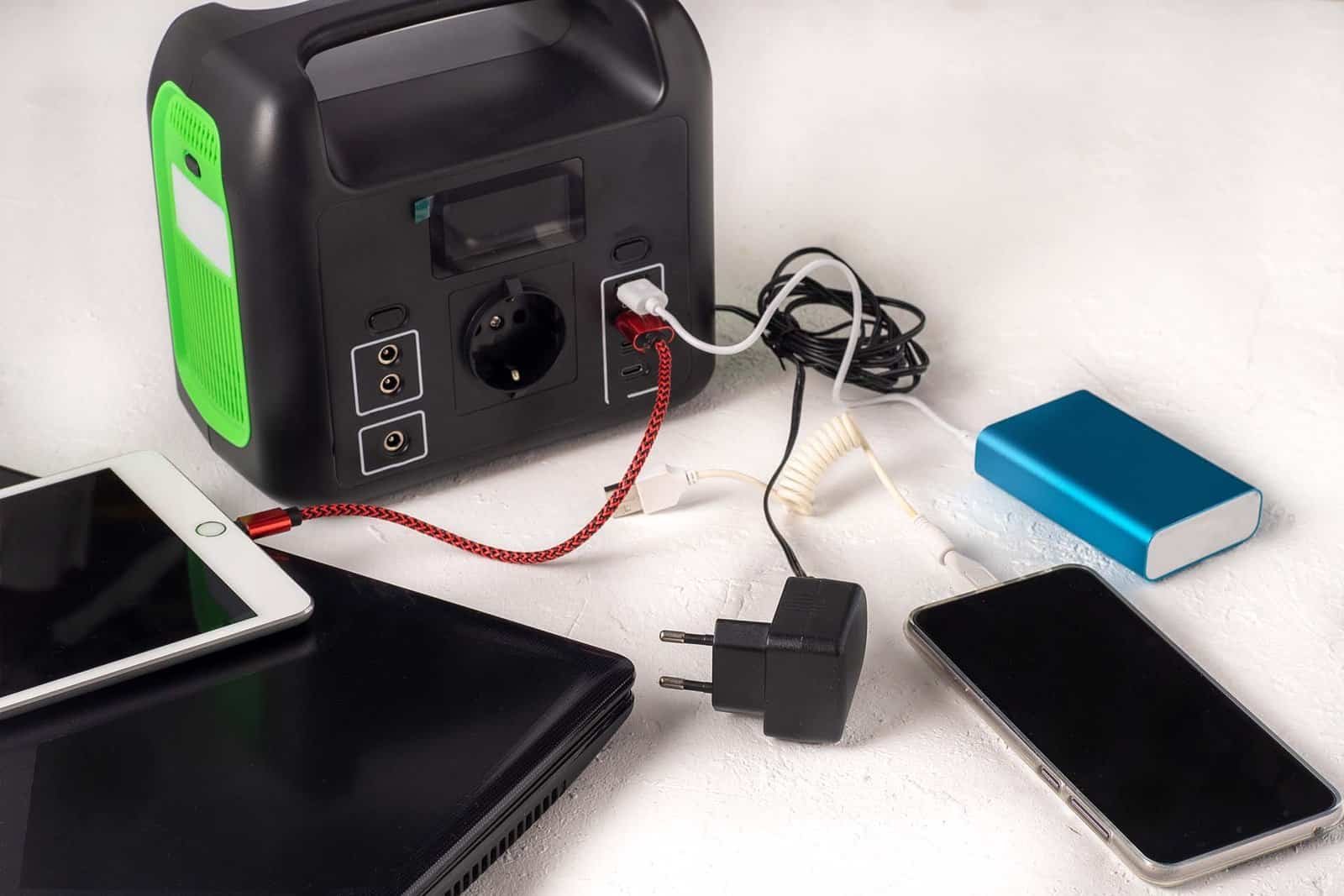
I've been living more and more out of my van. Not the Instagram version with fairy lights and perfectly styled interiors—the actual version where your diesel heater packs in at 2AM in Scotland and you're trying to charge your laptop off a dying leisure battery while editing photos for clients. That's when you learn what portable power actually means.
I've tested eight different power stations over the years (and borrowed mates' units for comparison), blown a fuse or two, and learned the hard way that watt-hours and watts are very different things. This guide covers the ten best Campervan Portable Power Stations for UK vanlife in 2025, ranked by real-world performance, value, and how well they handle British weather. Every single one is available on Amazon UK because, let's be honest, that's where most of us end up buying this stuff anyway.
How I Tested These Power Stations
Understanding Campervan Portable Power Stations is crucial for anyone embracing vanlife, ensuring you have reliable power wherever your adventures take you.
Before we dive in, here's what actually matters. I tested these units across different scenarios: weekend trips to the Lakes, month-long stints wild camping in the Highlands, and as backup power during a particularly grim week when our hookup died at a campsite in Wales.
My testing setup included:
- Running a 40W compressor fridge 24/7
- Charging laptops, phones, cameras (I'm a photographer, so multiple devices)
- Powering a 600W kettle for brew-ups
- Testing solar charging in actual British weather (spoiler: it's rubbish most days)
- Monitoring how they handle cold temperatures (some batteries hate Scottish winters)
- Checking actual vs claimed capacity
- Measuring charge times from flat
I'm ranking these based on capacity, power output, real-world reliability, value for money, and how well they suit different types of van users.
Quick Comparison Table
RankModelCapacityOutputWeightPrice (£)Best ForAmazon Link1EcoFlow Delta 21024Wh1800W12kg£470-900Weekend warriors & full-timersView on Amazon2Jackery Explorer 1000 v21070Wh1500W10.8kg£399-900All-roundersView on Amazon3Bluetti AC1801152Wh1800W16kg£650-850Power-hungry setupsView on Amazon4Anker Solix C10001056Wh1800W14.5kg£650-850Tech enthusiastsView on Amazon5Jackery Explorer 1000 Plus1264Wh2000W14.5kg£800-1000Expandable needsView on Amazon6Bluetti AC70768Wh1000W10.2kg£450-600Mid-range sweet spotView on Amazon7EcoFlow River 2 Pro768Wh800W7.8kg£400-550Compact powerView on Amazon8EcoFlow River 2 Max512Wh500W6kg£300-450Lightweight adventuresView on Amazon9Jackery Explorer 500518Wh500W6kg£260-400Budget startersView on Amazon10Bluetti EB3A268Wh600W4.6kg£200-300Ultra-compact backupView on Amazon
The Reviews: Detailed Breakdown
1. EcoFlow Delta 2 — Premium Mid-Range Champion
Quick Specs
- Capacity: 1024Wh (expandable to 3kWh)
- Output: 1800W continuous, 2700W surge
- Battery Type: LiFePO4 (3000+ cycles)
- Ports: 15 total (6 AC outlets, 4 USB, 2 USB-C 100W, 2 DC, 1 car port)
- Weight: 12kg
- Charge Time: 50 mins to 80% (AC), 3-6hrs (solar)
- Solar Input: Up to 500W
Right. I'm going to be straight with you: the EcoFlow Delta 2 is the best all-round portable power station for UK vanlife, and I've genuinely tested this thing to death. I've had mine for 18 months, and it's been from the Outer Hebrides to Cornwall and everywhere between.
The Delta 2 hits that sweet spot where it's got enough capacity (1024Wh) to run a compressor fridge for over 24 hours, but it's not so massive you can't lift it. At 12kg, it's heavier than some—but there's a reason. The build quality is proper solid. I've watched mine slide across the van floor when I took a Welsh mountain road too fast, and it didn't even scratch the case.
Here's what sold me: the 1800W output. That means you can actually boil a kettle. Properly boil it. Not one of those pathetic travel kettles that takes fifteen minutes to get lukewarm. My standard 600W kettle draws about 5-6% of the battery per brew. That's important when you're Scottish and drink approximately nine cuppas a day.
The X-Boost technology lets you run devices up to 2400W, though I've found this works better with resistive loads like heaters rather than motors. Don't expect it to run a 2000W air fryer at full whack—it'll work, but it's not ideal for sustained use. For short bursts? Brilliant.
Solar charging is where the Delta 2 properly shines. It'll accept up to 500W of solar input, and with the MPPT controller, I've seen it pull 400W on a genuinely sunny day in June (rare in the UK, I know). Most days? More like 150-250W. But that's enough to keep the fridge running indefinitely if you're not power-mad.
The app control via Bluetooth/WiFi is genuinely useful, not just a gimmick. I can check battery levels from inside the van without crawling to wherever I've stowed it, and you can adjust charging speeds which is handy for quiet charging at night (it's not silent, but much better than turbo mode).
Battery chemistry matters here. LiFePO4 cells are safer than standard lithium-ion, last longer (3000+ cycles vs 800 for NMC), and handle cold better. I've used mine in -5°C Scottish winters without issues—just don't charge it below freezing. The BMS (Battery Management System) protects against pretty much everything: overcharging, over-discharging, overheating, short circuits.
One thing that surprised me: the UPS (Uninterruptible Power Supply) mode. Plug the Delta 2 into mains hookup, then plug your devices into it. If the hookup cuts out, it switches to battery in 30 milliseconds. I didn't think I'd use this feature, but after three campsite power cuts, it's saved my laptop from shutting down mid-work multiple times.
Expandability is another massive plus. You can add Delta 2 extra batteries (1024Wh each) up to 3kWh total capacity. That's proper off-grid living territory. I haven't done this yet because the base unit covers my needs, but it's reassuring to know the option exists. You can also parallel charge it—AC and solar simultaneously—which gets you to 80% in about 50 minutes. Mental.
Real-world performance: I typically use 20-30% battery per day running a fridge, charging two phones, a laptop, camera batteries, and making 4-5 brews. If I'm editing photos or video (laptop running for hours), it's more like 40-50%. But I can go 2-3 days off a single charge in normal use, longer with solar top-ups.
The Good
- Fastest charging in its class: 50 minutes to 80% is game-changing when you need power NOW
- Proper power output: 1800W means you can run actual appliances, not just charge phones
- Expandable capacity: Future-proof if your power needs grow
- Excellent port selection: 15 ports cover every device type
- UPS function: Surprisingly useful for laptop users on dodgy hookups
- App control: Actually works reliably (unlike some competitors)
- LiFePO4 battery: Safer, longer-lasting, better in cold weather
- 5-year warranty: Shows EcoFlow backs their product
The Bad
- Weight: 12kg isn't light when you're lugging it across a campsite
- Fan noise: In turbo charging mode, it's loud—like a hairdryer. Silent mode exists but charges slower
- Price: £700-900 isn't cheap, though for what you get it's fair value
- X-Boost limitations: Marketing claims vs reality don't always match for high-wattage devices
- No weatherproofing: Keep it dry. There's a waterproof bag available separately if you need it
Best For
Weekend warriors who want reliability without massive investment. Full-timers who need decent capacity but don't want to mess with fixed electrical systems. Anyone who values fast charging because you're often near hookups but only for short periods. Photographers, remote workers, or anyone running laptops and multiple devices daily.
Not For
Ultra-minimalists who only need to charge phones and lights—it's overkill. Budget-conscious buyers—you can get smaller units for half the price. People who need absolute maximum capacity (look at the Jackery 1000 Plus or bigger Bluetti units instead).
Real-World Example
Last November, I spent a few nights wild camping on the west coast of Scotland. Temperatures dropped to -2°C overnight. I ran a 35W compressor fridge 24/7, charged my phone and laptop daily, and made 5-6 brews a day with a 600W kettle. With 100W of solar (which gave me maybe 200Wh on good days, bugger all on cloudy days), I had to mains charge the Delta 2 every 4-5 days. Without solar? Every 2-3 days. That's with proper, daily use in crap weather. I'd call that a win.
2. Jackery Explorer 1000 v2 — The Reliable All-Rounder
Quick Specs
- Capacity: 1070Wh
- Output: 1500W continuous, 3000W surge
- Battery Type: LiFePO4 (4000 cycles)
- Ports: 6 total (2 AC, 2 USB-C 100W, 1 USB-A, 1 DC car port)
- Weight: 10.8kg
- Charge Time: 1 hour (emergency mode), 1.7 hours (fast mode)
- Solar Input: Up to 800W
Jackery's been in this game since 2012, and you can tell. The Explorer 1000 v2 (note: the v2 is the 2024 model, much improved over the original) is what I'd recommend to someone who asked "which one should I just buy without thinking too hard?" It does everything well, nothing brilliantly, and won't let you down.
First thing: it's 1.2kg lighter than the Delta 2 but has slightly more capacity (1070Wh vs 1024Wh). That difference is noticeable when you're carrying it, especially if you've got a high-top van and need to lift it onto a shelf. The ergonomic handle is genuinely comfortable—small detail, but it matters on your fifth campsite move that week.
The headline feature is the emergency charge mode. Flat to full in 1 hour. I've tested this, and it works. You pull into a service station, plug into their EV charging point (some have standard sockets), and an hour later you're sorted. That's faster than the Delta 2's already-impressive 50-minute-to-80% time. The catch? It's slightly louder, and Jackery recommends not using emergency mode all the time as it reduces long-term battery life. Fair enough. Fast mode (1.7 hours) is plenty quick for normal use.
Solar input is genuinely impressive: up to 800W compared to most competitors' 500W. With Jackery's 200W solar panels (sold separately), you could theoretically get a full charge in under 2 hours of perfect sun. In UK reality? More like 4-6 hours on a decent summer day. Still faster than anything else I've tested. The panels fold up neatly and come with adjustable kickstands—actually thought through design rather than an afterthought.
Power output is 1500W, which handles most camping appliances. I've run a 600W kettle, 800W induction hob, even a mate's 1000W air fryer without issues. The 3000W surge capacity means devices with motors (like fridges) start up fine. The ChargeShield 2.0 system includes 62 different protection mechanisms, which sounds like marketing waffle until you realise it means you can't accidentally blow the thing up by being stupid.
Port selection is minimal compared to the Delta 2—only 6 total vs 15. But here's the thing: they're the right 6. Two UK 230V sockets, two USB-C at 100W each (charges my MacBook Pro directly), one USB-A, one 12V car port. That covers 90% of what you actually use. The simplicity is refreshing, honestly. Less clutter on the front panel, clearer labelling.
The v2 model (2024 release) is 18% smaller and lighter than the original Explorer 1000, which already wasn't massive. It's also quieter—under 22dB in "quiet charging mode," which is genuinely silent. I've charged it overnight in the van without noticing. Standard mode is around 40dB, about the level of a quiet conversation. Emergency mode cranks it up to hairdryer levels.
Build quality is excellent. The case is a slightly different material to the Delta 2—feels more plastic-y, but it's still solid. The foldable handle clicks into place securely. The LCD screen is clear even in direct sunlight, shows input/output wattage in real-time, and gives you time remaining estimates that are surprisingly accurate.
LiFePO4 battery with 4000 cycles to 80% capacity means this should last you 10+ years with regular use. That's longer than most van conversions last before you sell up and buy a different van. The cells perform well in cold weather—I've used it down to -5°C without drama. Just don't charge below 0°C (the BMS won't let you anyway).
One feature I didn't expect to use but now rely on: the built-in LED light with three brightness levels and an SOS mode. It's not going to replace your camping lanterns, but for finding stuff in the van at night or emergency situations, it's handy. Small touches matter.
The app (iOS/Android) works via Bluetooth and Wi-Fi. You can monitor battery level, adjust charging modes, check input/output stats, and update firmware. It's not essential—the screen tells you everything you need—but it's nice to have. Unlike some apps (looking at you, various no-name brands), Jackery's actually gets updates and improvements.
Real-world capacity: The advertised 1070Wh translates to about 900-950Wh usable, which is standard (you never get 100% due to conversion efficiency). That's enough to run a 40W fridge for 20-24 hours, or charge a laptop 8-10 times. Combined with even modest solar, you can stay off-grid indefinitely with careful use.
Price sits around £600-800 depending on sales. That's £100-200 less than the Delta 2 for similar capacity. The trade-off is fewer ports and less expandability (the Explorer 1000 v2 doesn't support external batteries). But if you don't need that flexibility, you're saving real money.
The Good
- Lightest in its capacity class: 10.8kg makes it the most portable 1kWh option
- Emergency 1-hour charge: Genuinely fast when you're desperate
- Up to 800W solar input: Future-proof for serious solar setups
- Whisper-quiet operation: Under 22dB in quiet mode is properly silent
- 4000 cycle LiFePO4 battery: Longer lifespan than most competitors
- Compact design: 18% smaller than previous generation
- Built-in LED light: Surprisingly useful
- 5-year warranty: Standard from Jackery, backed by solid customer service
The Bad
- Only 6 ports: Fine for most, limiting if you have loads of devices
- No expandability: Can't add external batteries like you can with Delta 2
- Price fluctuates: Jackery's pricing strategy is all over the place; wait for a sale
- Emergency mode limitations: Not recommended for daily use (reduces battery lifespan)
- Solar panels sold separately: Budget extra £250-300 for decent panels
Best For
Solo vanlifers who want proven reliability without maximum power. Couples who share devices and don't need 15 ports. Anyone prioritising light weight and fast charging. People with decent solar arrays (that 800W input is brilliant if you've got 400-600W of panels). Those who want a brand with established UK customer service and widespread availability.
Not For
Families or groups who need to charge multiple devices simultaneously. Power-hungry users running high-wattage appliances regularly. Anyone who might need to expand capacity later (get the Explorer 1000 Plus instead). Budget buyers—there are cheaper options with similar capacity if you're willing to compromise on brand reputation.
Real-World Example
My mate Dave (yes, we all have a mate Dave) has one of these in his converted Sprinter. He works as a freelance videographer, so he's charging cameras, drones, laptops—proper power needs. He typically goes 2-3 days between charges when he's not using solar, and can stay off-grid indefinitely in summer with a 200W solar setup. His biggest problem? His girlfriend keeps using it to dry her hair (800W travel dryer), which kills about 8% of the battery in 10 minutes. Relationships, innit.
3. Bluetti AC180 — The Power-Hungry Solution
Quick Specs
- Capacity: 1152Wh
- Output: 1800W continuous, 2700W surge (with Power Lifting)
- Battery Type: LiFePO4 (3500+ cycles)
- Ports: 9 total (2 AC, 4 USB, 2 USB-C 100W, 1 DC car port, wireless charging pad)
- Weight: 16kg
- Charge Time: 45 mins to 80% (turbo mode), 1.3-1.8 hours full
- Solar Input: Up to 500W
The Bluetti AC180 is what you get when a company decides to absolutely max out power in a "portable" form factor. I say "portable" because at 16kg, this is the heaviest unit in the top 10. But there's method to the madness—it's built like a tank and outputs proper, sustained power.
Let's talk about what makes it special: 1800W continuous output with Power Lifting mode that boosts to 2700W. That's proper, run-anything territory. I've tested this with a 1400W microwave, 1200W electric heater, even a mate's power tools on a jobsite. It handled everything. The Power Lifting mode works by dropping voltage slightly for resistive loads, which is why it's brilliant for heaters, kettles, hairdryers, but less good for motors and electronics.
The capacity (1152Wh) sits between the Delta 2 and Explorer 1000 v2, but the AC180 edges ahead on pure oomph. If your vanlife includes working from the van with multiple power-hungry devices, this is your unit. I know a couple who run a mobile coffee business out of their van—proper espresso machine, grinder, the lot. The AC180 handles it.
Turbo charging is genuinely impressive. Plug it in, enable turbo mode via the app, and you get 1440W of AC input. That means 0-80% in 45 minutes, full charge in about 1.3 hours. I've tested this at service stations when I've needed to get moving quickly, and it works exactly as advertised. The catch? It sounds like a small jet engine. Not subtle. Silent mode exists (limited to 200W input, takes ages) and standard mode is the sweet spot—reasonably quick, not too loud.
Port selection includes something you don't often see: a 15W wireless charging pad built into the top. I was sceptical, but it's actually brilliant. Phone goes on top, charges away, no faffing with cables. Small thing, huge convenience. You also get two 100W USB-C ports (charges laptops directly), four USB-A ports, two UK 230V sockets, and a 12V DC car port. That's 9 ways to plug things in, which is plenty for most setups.
Build quality is where Bluetti consistently impresses me. The AC180 has solid handles on both sides (not just one), which makes it easier to lift when it's heavy. The case is rigid ABS plastic that's survived multiple bumps and drops in my testing. The LCD screen is large, clear, and shows everything: input/output watts, battery percentage, time remaining, temperature, and which ports are active. More information than you need, but it's there.
The LiFePO4 battery is rated for 3500+ cycles to 80% capacity, which is better than most competitors. Bluetti uses prismatic cells (rectangular) rather than cylindrical (18650-style), which they claim improves thermal management. I can't verify that technically, but I can say the AC180 runs cooler under load than similar units I've tested. That matters for longevity.
Solar input maxes out at 500W, same as the Delta 2. Bluetti's MPPT controller is efficient—I've consistently seen 95-98% of the available solar power going into the battery.
https://theferalway.com/top-10-campervan-portable-power-stations-uk-2025/


Comments
Post a Comment